Redis bitmaps
Introduction to Redis bitmaps
-
BITCOUNT v2.6.0 @read @bitmap @slowCounts the number of set bits (population counting) in a string. O(N)
-
BITFIELD v3.2.0 @write @bitmap @slowPerforms arbitrary bitfield integer operations on strings. O(1) for each subcommand specified
-
BITFIELD_RO v6.0.0 @read @bitmap @fastPerforms arbitrary read-only bitfield integer operations on strings. O(1) for each subcommand specified
-
BITOP v2.6.0 @write @bitmap @slowPerforms bitwise operations on multiple strings, and stores the result. O(N)
-
BITPOS v2.8.7 @read @bitmap @slowFinds the first set (1) or clear (0) bit in a string. O(N)
-
GETBIT v2.2.0 @read @bitmap @fastReturns a bit value by offset. O(1)
-
SETBIT v2.2.0 @write @bitmap @slowSets or clears the bit at offset of the string value. Creates the key if it doesn't exist. O(1)
Bitmaps are not an actual data type, but a set of bit-oriented operations defined on the String type which is treated like a bit vector. Since strings are binary safe blobs and their maximum length is 512 MB, they are suitable to set up to 2^32 different bits.
You can perform bitwise operations on one or more strings. Some examples of bitmap use cases include:
- Efficient set representations for cases where the members of a set correspond to the integers 0-N.
- Object permissions, where each bit represents a particular permission, similar to the way that file systems store permissions.
Example
Suppose you have 1000 cyclists racing through the country-side, with sensors on their bikes labeled 0-999. You want to quickly determine whether a given sensor has pinged a tracking server within the hour to check in on a rider.
You can represent this scenario using a bitmap whose key references the current hour.
- Rider 123 pings the server on January 1, 2024 within the 00:00 hour. You can then confirm that rider 123 pinged the server. You can also check to see if rider 456 has pinged the server for that same hour.
> SETBIT pings:2024-01-01-00:00 123 1
(integer) 0
> GETBIT pings:2024-01-01-00:00 123
1
> GETBIT pings:2024-01-01-00:00 456
0res1 = r.setbit("pings:2024-01-01-00:00", 123, 1)
print(res1) # >>> 0
res2 = r.getbit("pings:2024-01-01-00:00", 123)
print(res2) # >>> 1
res3 = r.getbit("pings:2024-01-01-00:00", 456)
print(res3) # >>> 0
"""
Code samples for Bitmap doc pages:
https://redis.io/docs/latest/develop/data-types/bitmaps/
"""
import redis
# Connect without the usual `decode_responses=True` to
# see the binary values in the responses more easily.
r = redis.Redis()
res1 = r.setbit("pings:2024-01-01-00:00", 123, 1)
print(res1)  # >>> 0

res2 = r.getbit("pings:2024-01-01-00:00", 123)
print(res2)  # >>> 1

res3 = r.getbit("pings:2024-01-01-00:00", 456)
print(res3)  # >>> 0
r.setbit("pings:2024-01-01-00:00", 123, 1)
res4 = r.bitcount("pings:2024-01-01-00:00")
print(res4) # >>> 1
r.setbit("A", 0, 1)
r.setbit("A", 1, 1)
r.setbit("A", 3, 1)
r.setbit("A", 4, 1)
res5 = r.get("A")
print("{:08b}".format(int.from_bytes(res5, "big")))
# >>> 11011000
r.setbit("B", 3, 1)
r.setbit("B", 4, 1)
r.setbit("B", 7, 1)
res6 = r.get("B")
print("{:08b}".format(int.from_bytes(res6, "big")))
# >>> 00011001
r.setbit("C", 1, 1)
r.setbit("C", 2, 1)
r.setbit("C", 4, 1)
r.setbit("C", 5, 1)
res7 = r.get("C")
print("{:08b}".format(int.from_bytes(res7, "big")))
# >>> 01101100
r.bitop("AND", "R", "A", "B", "C")
res8 = r.get("R")
print("{:08b}".format(int.from_bytes(res8, "big")))
# >>> 00001000
r.bitop("OR", "R", "A", "B", "C")
res9 = r.get("R")
print("{:08b}".format(int.from_bytes(res9, "big")))
# >>> 11111101
r.bitop("XOR", "R", "A", "B")
res10 = r.get("R")
print("{:08b}".format(int.from_bytes(res10, "big")))
# >>> 11000001
r.bitop("NOT", "R", "A")
res11 = r.get("R")
print("{:08b}".format(int.from_bytes(res11, "big")))
# >>> 00100111
r.bitop("DIFF", "R", "A", "B", "C")
res12 = r.get("R")
print("{:08b}".format(int.from_bytes(res12, "big")))
# >>> 10000000
r.bitop("DIFF1", "R", "A", "B", "C")
res13 = r.get("R")
print("{:08b}".format(int.from_bytes(res13, "big")))
# >>> 00100101
r.bitop("ANDOR", "R", "A", "B", "C")
res14 = r.get("R")
print("{:08b}".format(int.from_bytes(res14, "big")))
# >>> 01011000
r.bitop("ONE", "R", "A", "B", "C")
res15 = r.get("R")
print("{:08b}".format(int.from_bytes(res15, "big")))
# >>> 10100101
const res1 = await client.setBit("pings:2024-01-01-00:00", 123, 1)
console.log(res1)  // >>> 0

const res2 = await client.getBit("pings:2024-01-01-00:00", 123)
console.log(res2)  // >>> 1

const res3 = await client.getBit("pings:2024-01-01-00:00", 456)
console.log(res3)  // >>> 0
import { createClient, RESP_TYPES } from 'redis';

const client = createClient({
  commandOptions: {
    typeMapping: {
      [RESP_TYPES.BLOB_STRING]: Buffer
    }
  }
});
await client.connect();


const res1 = await client.setBit("pings:2024-01-01-00:00", 123, 1)
console.log(res1)  // >>> 0

const res2 = await client.getBit("pings:2024-01-01-00:00", 123)
console.log(res2)  // >>> 1

const res3 = await client.getBit("pings:2024-01-01-00:00", 456)
console.log(res3)  // >>> 0


await client.setBit("pings:2024-01-01-00:00", 123, 1)
const res4 = await client.bitCount("pings:2024-01-01-00:00")
console.log(res4)  // >>> 1

await client.setBit("A", 0, 1)
await client.setBit("A", 1, 1)
await client.setBit("A", 3, 1)
await client.setBit("A", 4, 1)

const res5 = await client.get("A")
console.log(res5.readUInt8(0).toString(2).padStart(8, '0'))
// >>> 11011000

await client.setBit("B", 3, 1)
await client.setBit("B", 4, 1)
await client.setBit("B", 7, 1)

const res6 = await client.get("B")
console.log(res6.readUInt8(0).toString(2).padStart(8, '0'))
// >>> 00011001

await client.setBit("C", 1, 1)
await client.setBit("C", 2, 1)
await client.setBit("C", 4, 1)
await client.setBit("C", 5, 1)

const res7 = await client.get("C")
console.log(res7.readUInt8(0).toString(2).padStart(8, '0'))
// >>> 01101100

await client.bitOp("AND", "R", ["A", "B", "C"])
const res8 = await client.get("R")
console.log(res8.readUInt8(0).toString(2).padStart(8, '0'))
// >>> 00001000

await client.bitOp("OR", "R", ["A", "B", "C"])
const res9 = await client.get("R")
console.log(res9.readUInt8(0).toString(2).padStart(8, '0'))
// >>> 11111101

await client.bitOp("XOR", "R", ["A", "B"]) // XOR uses two keys here
const res10 = await client.get("R")
console.log(res10.readUInt8(0).toString(2).padStart(8, '0'))
// >>> 11000001

await client.bitOp("NOT", "R", "A")
const res11 = await client.get("R")
console.log(res11.readUInt8(0).toString(2).padStart(8, '0'))
// >>> 00100111

await client.bitOp("DIFF", "R", ["A", "B", "C"])
const res12 = await client.get("R")
console.log(res12.readUInt8(0).toString(2).padStart(8, '0'))
// >>> 10000000

await client.bitOp("DIFF1", "R", ["A", "B", "C"])
const res13 = await client.get("R")
console.log(res13.readUInt8(0).toString(2).padStart(8, '0'))
// >>> 00100101

await client.bitOp("ANDOR", "R", ["A", "B", "C"])
const res14 = await client.get("R")
console.log(res14.readUInt8(0).toString(2).padStart(8, '0'))
// >>> 01011000

await client.bitOp("ONE", "R", ["A", "B", "C"])
const res15 = await client.get("R")
console.log(res15.readUInt8(0).toString(2).padStart(8, '0'))
// >>> 10100101
        boolean res1 = jedis.setbit("pings:2024-01-01-00:00", 123, true);
        System.out.println(res1); // >>> false

        boolean res2 = jedis.getbit("pings:2024-01-01-00:00", 123);
        System.out.println(res2); // >>> true

        boolean res3 = jedis.getbit("pings:2024-01-01-00:00", 456);
        System.out.println(res3); // >>> false
package io.redis.examples;

import redis.clients.jedis.UnifiedJedis;
import redis.clients.jedis.args.BitOP;

public class BitMapsExample {

    public void run() {
        UnifiedJedis jedis = new UnifiedJedis("redis://localhost:6379");


        boolean res1 = jedis.setbit("pings:2024-01-01-00:00", 123, true);
        System.out.println(res1); // >>> false

        boolean res2 = jedis.getbit("pings:2024-01-01-00:00", 123);
        System.out.println(res2); // >>> true

        boolean res3 = jedis.getbit("pings:2024-01-01-00:00", 456);
        System.out.println(res3); // >>> false


        long res4 = jedis.bitcount("pings:2024-01-01-00:00");
        System.out.println(res4); // >>> 1


        jedis.setbit("A", 0, true);
        jedis.setbit("A", 1, true);
        jedis.setbit("A", 3, true);
        jedis.setbit("A", 4, true);

        byte[] res5 = jedis.get("A".getBytes());
        System.out.println(String.format("%8s", Integer.toBinaryString(res5[0] & 0xFF)).replace(' ', '0'));
        // >>> 11011000

        jedis.setbit("B", 3, true);
        jedis.setbit("B", 4, true);
        jedis.setbit("B", 7, true);

        byte[] res6 = jedis.get("B".getBytes());
        System.out.println(String.format("%8s", Integer.toBinaryString(res6[0] & 0xFF)).replace(' ', '0'));
        // >>> 00011001

        jedis.setbit("C", 1, true);
        jedis.setbit("C", 2, true);
        jedis.setbit("C", 4, true);
        jedis.setbit("C", 5, true);

        byte[] res7 = jedis.get("C".getBytes());
        System.out.println(String.format("%8s", Integer.toBinaryString(res7[0] & 0xFF)).replace(' ', '0'));
        // >>> 01101100

        jedis.bitop(BitOP.AND, "R", "A", "B", "C");
        byte[] res8 = jedis.get("R".getBytes());
        System.out.println(String.format("%8s", Integer.toBinaryString(res8[0] & 0xFF)).replace(' ', '0'));
        // >>> 00001000

        jedis.bitop(BitOP.OR, "R", "A", "B", "C");
        byte[] res9 = jedis.get("R".getBytes());
        System.out.println(String.format("%8s", Integer.toBinaryString(res9[0] & 0xFF)).replace(' ', '0'));
        // >>> 11111101

        jedis.bitop(BitOP.XOR, "R", "A", "B");
        byte[] res10 = jedis.get("R".getBytes());
        System.out.println(String.format("%8s", Integer.toBinaryString(res10[0] & 0xFF)).replace(' ', '0'));
        // >>> 11000001

        jedis.bitop(BitOP.NOT, "R", "A");
        byte[] res11 = jedis.get("R".getBytes());
        System.out.println(String.format("%8s", Integer.toBinaryString(res11[0] & 0xFF)).replace(' ', '0'));
        // >>> 00100111

        jedis.bitop(BitOP.DIFF, "R", "A", "B", "C");
        byte[] res12 = jedis.get("R".getBytes());
        System.out.println(String.format("%8s", Integer.toBinaryString(res12[0] & 0xFF)).replace(' ', '0'));
        // >>> 10000000

        jedis.bitop(BitOP.DIFF1, "R", "A", "B", "C");
        byte[] res13 = jedis.get("R".getBytes());
        System.out.println(String.format("%8s", Integer.toBinaryString(res13[0] & 0xFF)).replace(' ', '0'));
        // >>> 00100101

        jedis.bitop(BitOP.ANDOR, "R", "A", "B", "C");
        byte[] res14 = jedis.get("R".getBytes());
        System.out.println(String.format("%8s", Integer.toBinaryString(res14[0] & 0xFF)).replace(' ', '0'));
        // >>> 01011000

        jedis.bitop(BitOP.ONE, "R", "A", "B", "C");
        byte[] res15 = jedis.get("R".getBytes());
        System.out.println(String.format("%8s", Integer.toBinaryString(res15[0] & 0xFF)).replace(' ', '0'));
        // >>> 10100101


        jedis.close();
    }
}
            CompletableFuture<Void> ping = async.setbit("pings:2024-01-01-00:00", 123, 1).thenCompose(res1 -> {
                System.out.println(res1); // >>> 0
                return async.getbit("pings:2024-01-01-00:00", 123);
            }).thenCompose(res2 -> {
                System.out.println(res2); // >>> 1
                return async.getbit("pings:2024-01-01-00:00", 456);
            }).thenAccept(res3 -> {
                System.out.println(res3); // >>> 0
            }).toCompletableFuture();
package io.redis.examples.async;

import io.lettuce.core.*;
import io.lettuce.core.api.StatefulRedisConnection;
import io.lettuce.core.api.async.RedisAsyncCommands;
import io.lettuce.core.codec.ByteArrayCodec;

import java.util.concurrent.CompletableFuture;


public class BitmapExample {

    public void run() {
        RedisClient redisClient = RedisClient.create("redis://localhost:6379");

        try (StatefulRedisConnection<String, String> connection = redisClient.connect();
                StatefulRedisConnection<byte[], byte[]> bytesConnection = redisClient.connect(ByteArrayCodec.INSTANCE)) {
            RedisAsyncCommands<String, String> async = connection.async();
            RedisAsyncCommands<byte[], byte[]> asyncBytes = bytesConnection.async();


            CompletableFuture<Void> ping = async.setbit("pings:2024-01-01-00:00", 123, 1).thenCompose(res1 -> {
                System.out.println(res1); // >>> 0
                return async.getbit("pings:2024-01-01-00:00", 123);
            }).thenCompose(res2 -> {
                System.out.println(res2); // >>> 1
                return async.getbit("pings:2024-01-01-00:00", 456);
            }).thenAccept(res3 -> {
                System.out.println(res3); // >>> 0
            }).toCompletableFuture();
            ping.join();

            CompletableFuture<Void> bitcount = async.bitcount("pings:2024-01-01-00:00").thenAccept(res4 -> {
                System.out.println(res4); // >>> 1
            }).toCompletableFuture();
            bitcount.join();

            CompletableFuture<Void> setup = async.setbit("A", 0, 1).thenCompose(v -> async.setbit("A", 1, 1))
                    .thenCompose(v -> async.setbit("A", 3, 1)).thenCompose(v -> async.setbit("A", 4, 1))
                    .thenCompose(v -> async.setbit("B", 3, 1)).thenCompose(v -> async.setbit("B", 4, 1))
                    .thenCompose(v -> async.setbit("B", 7, 1)).thenCompose(v -> async.setbit("C", 1, 1))
                    .thenCompose(v -> async.setbit("C", 2, 1)).thenCompose(v -> async.setbit("C", 4, 1))
                    .thenCompose(v -> async.setbit("C", 5, 1)).thenCompose(v -> asyncBytes.get("A".getBytes()))
                    .thenApply(res -> {
                        byte b = (res != null && res.length > 0) ? res[0] : 0;
                        String bitsA = String.format("%8s", Integer.toBinaryString(b & 0xFF)).replace(' ', '0');
                        System.out.println(bitsA); // >>> 11011000
                        return bitsA;
                    }).thenCompose(v -> asyncBytes.get("B".getBytes())).thenApply(res -> {
                        byte b = (res != null && res.length > 0) ? res[0] : 0;
                        String bitsB = String.format("%8s", Integer.toBinaryString(b & 0xFF)).replace(' ', '0');
                        System.out.println(bitsB); // >>> 00011001
                        return bitsB;
                    })
                    // Print C
                    .thenCompose(v -> asyncBytes.get("C".getBytes())).thenAccept(res -> {
                        byte b = (res != null && res.length > 0) ? res[0] : 0;
                        String bitsC = String.format("%8s", Integer.toBinaryString(b & 0xFF)).replace(' ', '0');
                        System.out.println(bitsC); // >>> 01101100
                    }).toCompletableFuture();
            setup.join();

            CompletableFuture<Void> andOp = async.bitopAnd("R", "A", "B", "C")
                    .thenCompose(len -> asyncBytes.get("R".getBytes())).thenAccept(res -> {
                        byte b = (res != null && res.length > 0) ? res[0] : 0;
                        String bits = String.format("%8s", Integer.toBinaryString(b & 0xFF)).replace(' ', '0');
                        System.out.println(bits); // >>> 00001000
                    }).toCompletableFuture();
            andOp.join();

            CompletableFuture<Void> orOp = async.bitopOr("R", "A", "B", "C").thenCompose(len -> asyncBytes.get("R".getBytes()))
                    .thenAccept(res -> {
                        byte b = (res != null && res.length > 0) ? res[0] : 0;
                        String bits = String.format("%8s", Integer.toBinaryString(b & 0xFF)).replace(' ', '0');
                        System.out.println(bits); // >>> 11111101
                    }).toCompletableFuture();
            orOp.join();

            CompletableFuture<Void> xorOp = async.bitopXor("R", "A", "B").thenCompose(len -> asyncBytes.get("R".getBytes()))
                    .thenAccept(res -> {
                        byte b = (res != null && res.length > 0) ? res[0] : 0;
                        String bits = String.format("%8s", Integer.toBinaryString(b & 0xFF)).replace(' ', '0');
                        System.out.println(bits); // >>> 11000001
                    }).toCompletableFuture();
            xorOp.join();

            CompletableFuture<Void> notOp = async.bitopNot("R", "A").thenCompose(len -> asyncBytes.get("R".getBytes()))
                    .thenAccept(res -> {
                        byte b = (res != null && res.length > 0) ? res[0] : 0;
                        String bits = String.format("%8s", Integer.toBinaryString(b & 0xFF)).replace(' ', '0');
                        System.out.println(bits); // >>> 00100111
                    }).toCompletableFuture();
            notOp.join();

            CompletableFuture<Void> diffOp = async.bitopDiff("R", "A", "B", "C")
                    .thenCompose(len -> asyncBytes.get("R".getBytes())).thenAccept(res -> {
                        byte b = (res != null && res.length > 0) ? res[0] : 0;
                        String bits = String.format("%8s", Integer.toBinaryString(b & 0xFF)).replace(' ', '0');
                        System.out.println(bits); // >>> 10000000
                    }).toCompletableFuture();
            diffOp.join();

            CompletableFuture<Void> diff1Op = async.bitopDiff1("R", "A", "B", "C")
                    .thenCompose(len -> asyncBytes.get("R".getBytes())).thenAccept(res -> {
                        byte b = (res != null && res.length > 0) ? res[0] : 0;
                        String bits = String.format("%8s", Integer.toBinaryString(b & 0xFF)).replace(' ', '0');
                        System.out.println(bits); // >>> 00100101
                    }).toCompletableFuture();
            diff1Op.join();

            CompletableFuture<Void> andorOp = async.bitopAndor("R", "A", "B", "C")
                    .thenCompose(len -> asyncBytes.get("R".getBytes())).thenAccept(res -> {
                        byte b = (res != null && res.length > 0) ? res[0] : 0;
                        String bits = String.format("%8s", Integer.toBinaryString(b & 0xFF)).replace(' ', '0');
                        System.out.println(bits); // >>> 01011000
                    }).toCompletableFuture();
            andorOp.join();

            CompletableFuture<Void> oneOp = async.bitopOne("R", "A", "B", "C")
                    .thenCompose(len -> asyncBytes.get("R".getBytes())).thenAccept(res -> {
                        byte b = (res != null && res.length > 0) ? res[0] : 0;
                        String bits = String.format("%8s", Integer.toBinaryString(b & 0xFF)).replace(' ', '0');
                        System.out.println(bits); // >>> 10100101
                    }).toCompletableFuture();
            oneOp.join();

        } finally {
            redisClient.shutdown();
        }
    }

}
-
Sets or clears the bit at offset of the string value. Creates the key if it doesn't exist.
-
setbit(
- key: K, // the key.
- offset: long, // the offset type: long.
- value: int // the value type: string.
-
setbit(
            Mono<Void> ping = reactive.setbit("pings:2024-01-01-00:00", 123, 1).doOnNext(res1 -> {
                System.out.println(res1); // >>> 0
            }).flatMap(v -> reactive.getbit("pings:2024-01-01-00:00", 123)).doOnNext(res2 -> {
                System.out.println(res2); // >>> 1
            }).flatMap(v -> reactive.getbit("pings:2024-01-01-00:00", 456)).doOnNext(res3 -> {
                System.out.println(res3); // >>> 0
            }).then();
package io.redis.examples.reactive;

import io.lettuce.core.*;
import io.lettuce.core.api.StatefulRedisConnection;
import io.lettuce.core.api.reactive.RedisReactiveCommands;
import io.lettuce.core.codec.ByteArrayCodec;
import reactor.core.publisher.Mono;


public class BitmapExample {

    public void run() {
        RedisClient redisClient = RedisClient.create("redis://localhost:6379");

        try (StatefulRedisConnection<String, String> connection = redisClient.connect();
                StatefulRedisConnection<byte[], byte[]> bytesConnection = redisClient.connect(ByteArrayCodec.INSTANCE)) {

            RedisReactiveCommands<String, String> reactive = connection.reactive();
            RedisReactiveCommands<byte[], byte[]> reactiveBytes = bytesConnection.reactive();


            Mono<Void> ping = reactive.setbit("pings:2024-01-01-00:00", 123, 1).doOnNext(res1 -> {
                System.out.println(res1); // >>> 0
            }).flatMap(v -> reactive.getbit("pings:2024-01-01-00:00", 123)).doOnNext(res2 -> {
                System.out.println(res2); // >>> 1
            }).flatMap(v -> reactive.getbit("pings:2024-01-01-00:00", 456)).doOnNext(res3 -> {
                System.out.println(res3); // >>> 0
            }).then();
            ping.block();

            Mono<Void> bitcount = reactive.bitcount("pings:2024-01-01-00:00").doOnNext(res4 -> {
                System.out.println(res4); // >>> 1
            }).then();
            bitcount.block();

            Mono<Void> setup = reactive.setbit("A", 0, 1).then(reactive.setbit("A", 1, 1)).then(reactive.setbit("A", 3, 1))
                    .then(reactive.setbit("A", 4, 1)).then(reactive.setbit("B", 3, 1)).then(reactive.setbit("B", 4, 1))
                    .then(reactive.setbit("B", 7, 1)).then(reactive.setbit("C", 1, 1)).then(reactive.setbit("C", 2, 1))
                    .then(reactive.setbit("C", 4, 1)).then(reactive.setbit("C", 5, 1)).then(reactiveBytes.get("A".getBytes()))
                    .doOnNext(res -> {
                        byte b = (res != null && res.length > 0) ? res[0] : 0;
                        String bitsA = String.format("%8s", Integer.toBinaryString(b & 0xFF)).replace(' ', '0');
                        System.out.println(bitsA); // >>> 11011000
                    }).then(reactiveBytes.get("B".getBytes())).doOnNext(res -> {
                        byte b = (res != null && res.length > 0) ? res[0] : 0;
                        String bitsB = String.format("%8s", Integer.toBinaryString(b & 0xFF)).replace(' ', '0');
                        System.out.println(bitsB); // >>> 00011001
                    }).then(reactiveBytes.get("C".getBytes())).doOnNext(res -> {
                        byte b = (res != null && res.length > 0) ? res[0] : 0;
                        String bitsC = String.format("%8s", Integer.toBinaryString(b & 0xFF)).replace(' ', '0');
                        System.out.println(bitsC); // >>> 01101100
                    }).then();
            setup.block();

            Mono<Void> andOp = reactive.bitopAnd("R", "A", "B", "C").then(reactiveBytes.get("R".getBytes())).doOnNext(res -> {
                byte b = (res != null && res.length > 0) ? res[0] : 0;
                String bits = String.format("%8s", Integer.toBinaryString(b & 0xFF)).replace(' ', '0');
                System.out.println(bits); // >>> 00001000
            }).then();
            andOp.block();

            Mono<Void> orOp = reactive.bitopOr("R", "A", "B", "C").then(reactiveBytes.get("R".getBytes())).doOnNext(res -> {
                byte b = (res != null && res.length > 0) ? res[0] : 0;
                String bits = String.format("%8s", Integer.toBinaryString(b & 0xFF)).replace(' ', '0');
                System.out.println(bits); // >>> 11111101
            }).then();
            orOp.block();

            Mono<Void> xorOp = reactive.bitopXor("R", "A", "B").then(reactiveBytes.get("R".getBytes())).doOnNext(res -> {
                byte b = (res != null && res.length > 0) ? res[0] : 0;
                String bits = String.format("%8s", Integer.toBinaryString(b & 0xFF)).replace(' ', '0');
                System.out.println(bits); // >>> 11000001
            }).then();
            xorOp.block();

            Mono<Void> notOp = reactive.bitopNot("R", "A").then(reactiveBytes.get("R".getBytes())).doOnNext(res -> {
                byte b = (res != null && res.length > 0) ? res[0] : 0;
                String bits = String.format("%8s", Integer.toBinaryString(b & 0xFF)).replace(' ', '0');
                System.out.println(bits); // >>> 00100111
            }).then();
            notOp.block();

            Mono<Void> diffOp = reactive.bitopDiff("R", "A", "B", "C").then(reactiveBytes.get("R".getBytes())).doOnNext(res -> {
                byte b = (res != null && res.length > 0) ? res[0] : 0;
                String bits = String.format("%8s", Integer.toBinaryString(b & 0xFF)).replace(' ', '0');
                System.out.println(bits); // >>> 10000000
            }).then();
            diffOp.block();

            Mono<Void> diff1Op = reactive.bitopDiff1("R", "A", "B", "C").then(reactiveBytes.get("R".getBytes()))
                    .doOnNext(res -> {
                        byte b = (res != null && res.length > 0) ? res[0] : 0;
                        String bits = String.format("%8s", Integer.toBinaryString(b & 0xFF)).replace(' ', '0');
                        System.out.println(bits); // >>> 00100101
                    }).then();
            diff1Op.block();

            Mono<Void> andorOp = reactive.bitopAndor("R", "A", "B", "C").then(reactiveBytes.get("R".getBytes()))
                    .doOnNext(res -> {
                        byte b = (res != null && res.length > 0) ? res[0] : 0;
                        String bits = String.format("%8s", Integer.toBinaryString(b & 0xFF)).replace(' ', '0');
                        System.out.println(bits); // >>> 01011000
                    }).then();
            andorOp.block();

            Mono<Void> oneOp = reactive.bitopOne("R", "A", "B", "C").then(reactiveBytes.get("R".getBytes())).doOnNext(res -> {
                byte b = (res != null && res.length > 0) ? res[0] : 0;
                String bits = String.format("%8s", Integer.toBinaryString(b & 0xFF)).replace(' ', '0');
                System.out.println(bits); // >>> 10100101
            }).then();
            oneOp.block();


        } finally {
            redisClient.shutdown();
        }
    }

}
-
Sets or clears the bit at offset of the string value. Creates the key if it doesn't exist.
-
setbit(
- key: K, // the key.
- offset: long, // the offset type: long.
- value: int // the value type: string.
-
setbit(
	res1, err := rdb.SetBit(ctx, "pings:2024-01-01-00:00", 123, 1).Result()

	if err != nil {
		panic(err)
	}

	fmt.Println(res1) // >>> 0

	res2, err := rdb.GetBit(ctx, "pings:2024-01-01-00:00", 123).Result()

	if err != nil {
		panic(err)
	}

	fmt.Println(res2) // >>> 1

	res3, err := rdb.GetBit(ctx, "pings:2024-01-01-00:00", 456).Result()

	if err != nil {
		panic(err)
	}

	fmt.Println(res3) // >>> 0
package example_commands_test

import (
	"context"
	"fmt"

	"github.com/redis/go-redis/v9"
)


func ExampleClient_ping() {
	ctx := context.Background()

	rdb := redis.NewClient(&redis.Options{
		Addr:     "localhost:6379",
		Password: "", // no password docs
		DB:       0,  // use default DB
	})


	res1, err := rdb.SetBit(ctx, "pings:2024-01-01-00:00", 123, 1).Result()

	if err != nil {
		panic(err)
	}

	fmt.Println(res1) // >>> 0

	res2, err := rdb.GetBit(ctx, "pings:2024-01-01-00:00", 123).Result()

	if err != nil {
		panic(err)
	}

	fmt.Println(res2) // >>> 1

	res3, err := rdb.GetBit(ctx, "pings:2024-01-01-00:00", 456).Result()

	if err != nil {
		panic(err)
	}

	fmt.Println(res3) // >>> 0

}

func ExampleClient_bitcount() {
	ctx := context.Background()

	rdb := redis.NewClient(&redis.Options{
		Addr:     "localhost:6379",
		Password: "", // no password docs
		DB:       0,  // use default DB
	})


	res4, err := rdb.BitCount(ctx, "pings:2024-01-01-00:00",
		&redis.BitCount{
			Start: 0,
			End:   456,
		}).Result()

	if err != nil {
		panic(err)
	}

	fmt.Println(res4) // >>> 1

}

func ExampleClient_bitop_setup() {
	ctx := context.Background()

	rdb := redis.NewClient(&redis.Options{
		Addr:     "localhost:6379",
		Password: "", // no password docs
		DB:       0,  // use default DB
	})


	rdb.SetBit(ctx, "A", 0, 1)
	rdb.SetBit(ctx, "A", 1, 1)
	rdb.SetBit(ctx, "A", 3, 1)
	rdb.SetBit(ctx, "A", 4, 1)
	ba, _ := rdb.Get(ctx, "A").Bytes()
	fmt.Printf("%08b\n", ba[0])
	// >>> 11011000

	rdb.SetBit(ctx, "B", 3, 1)
	rdb.SetBit(ctx, "B", 4, 1)
	rdb.SetBit(ctx, "B", 7, 1)
	bb, _ := rdb.Get(ctx, "B").Bytes()
	fmt.Printf("%08b\n", bb[0])
	// >>> 00011001

	rdb.SetBit(ctx, "C", 1, 1)
	rdb.SetBit(ctx, "C", 2, 1)
	rdb.SetBit(ctx, "C", 4, 1)
	rdb.SetBit(ctx, "C", 5, 1)
	bc, _ := rdb.Get(ctx, "C").Bytes()
	fmt.Printf("%08b\n", bc[0])
	// >>> 01101100

}

func ExampleClient_bitop_ops() {
	ctx := context.Background()

	rdb := redis.NewClient(&redis.Options{
		Addr:     "localhost:6379",
		Password: "", // no password docs
		DB:       0,  // use default DB
	})


	rdb.SetBit(ctx, "A", 0, 1)
	rdb.SetBit(ctx, "A", 1, 1)
	rdb.SetBit(ctx, "A", 3, 1)
	rdb.SetBit(ctx, "A", 4, 1)
	rdb.SetBit(ctx, "B", 3, 1)
	rdb.SetBit(ctx, "B", 4, 1)
	rdb.SetBit(ctx, "B", 7, 1)
	rdb.SetBit(ctx, "C", 1, 1)
	rdb.SetBit(ctx, "C", 2, 1)
	rdb.SetBit(ctx, "C", 4, 1)
	rdb.SetBit(ctx, "C", 5, 1)

	rdb.BitOpAnd(ctx, "R", "A", "B", "C")
	br, _ := rdb.Get(ctx, "R").Bytes()
	fmt.Printf("%08b\n", br[0])
	// >>> 00001000

	rdb.BitOpOr(ctx, "R", "A", "B", "C")
	br, _ = rdb.Get(ctx, "R").Bytes()
	fmt.Printf("%08b\n", br[0])
	// >>> 11111101

	rdb.BitOpXor(ctx, "R", "A", "B")
	br, _ = rdb.Get(ctx, "R").Bytes()
	fmt.Printf("%08b\n", br[0])
	// >>> 11000001

	rdb.BitOpNot(ctx, "R", "A")
	br, _ = rdb.Get(ctx, "R").Bytes()
	fmt.Printf("%08b\n", br[0])
	// >>> 00100111

	rdb.BitOpDiff(ctx, "R", "A", "B", "C")
	br, _ = rdb.Get(ctx, "R").Bytes()
	fmt.Printf("%08b\n", br[0])
	// >>> 10000000

	rdb.BitOpDiff1(ctx, "R", "A", "B", "C")
	br, _ = rdb.Get(ctx, "R").Bytes()
	fmt.Printf("%08b\n", br[0])
	// >>> 00100101

	rdb.BitOpAndOr(ctx, "R", "A", "B", "C")
	br, _ = rdb.Get(ctx, "R").Bytes()
	fmt.Printf("%08b\n", br[0])
	// >>> 01011000

	rdb.BitOpOne(ctx, "R", "A", "B", "C")
	br, _ = rdb.Get(ctx, "R").Bytes()
	fmt.Printf("%08b\n", br[0])
	// >>> 10100101

}
        bool res1 = db.StringSetBit("pings:2024-01-01-00:00", 123, true);
        Console.WriteLine(res1);    // >>> 0

        bool res2 = db.StringGetBit("pings:2024-01-01-00:00", 123);
        Console.WriteLine(res2);    // >>> True

        bool res3 = db.StringGetBit("pings:2024-01-01-00:00", 456);
        Console.WriteLine(res3);    // >>> False
using StackExchange.Redis;


public class BitmapTutorial
{
    public void Run()
    {
        var muxer = ConnectionMultiplexer.Connect("localhost:6379");
        var db = muxer.GetDatabase();


        bool res1 = db.StringSetBit("pings:2024-01-01-00:00", 123, true);
        Console.WriteLine(res1);    // >>> 0

        bool res2 = db.StringGetBit("pings:2024-01-01-00:00", 123);
        Console.WriteLine(res2);    // >>> True

        bool res3 = db.StringGetBit("pings:2024-01-01-00:00", 456);
        Console.WriteLine(res3);    // >>> False

        // Tests for 'ping' step.


        bool res4 = db.StringSetBit("pings:2024-01-01-00:00", 123, true);
        long res5 = db.StringBitCount("pings:2024-01-01-00:00");
        Console.WriteLine(res5);    // >>> 1

        // Tests for 'bitcount' step.


        // Bitwise operations are not supported in NRedisStack.


        // Bitwise operations are not supported in NRedisStack.


        // Bitwise operations are not supported in NRedisStack.


        // Bitwise operations are not supported in NRedisStack.


        // Bitwise operations are not supported in NRedisStack.


        // Bitwise operations are not supported in NRedisStack.


        // Bitwise operations are not supported in NRedisStack.


        // Bitwise operations are not supported in NRedisStack.


        // Bitwise operations are not supported in NRedisStack.


    }
}
-
Sets or clears the bit at offset of the string value. Creates the key if it doesn't exist.
-
StringSetBit(
- key: RedisKey, // The key of the string.
- offset: long, // The offset in the string to set bit.
- bit: bool, // The bit value to set, true for 1, false for 0.
- flags: CommandFlags // The flags to use for this operation.
-
StringSetBitAsync(
- key: RedisKey,
- offset: long,
- bit: bool,
- flags: CommandFlags
-
StringSetBit(
- key: RedisKey, // The key of the string.
- offset: long, // The offset in the string to set bit.
- bit: bool, // The bit value to set, true for 1, false for 0.
- flags: CommandFlags // The flags to use for this operation.
-
StringSetBitAsync(
- key: RedisKey,
- offset: long,
- value: bool,
- flags: CommandFlags
-
StringSetBit(
-
Returns a bit value by offset.
-
StringGetBit(
- key: RedisKey, // The key of the string.
- offset: long, // The offset in the string to get a bit at.
- flags: CommandFlags // The flags to use for this operation.
-
StringGetBitAsync(
- key: RedisKey,
- offset: long,
- flags: CommandFlags
-
StringGetBit(
- key: RedisKey, // The key of the string.
- offset: long, // The offset in the string to get a bit at.
- flags: CommandFlags // The flags to use for this operation.
-
StringGetBitAsync(
- key: RedisKey,
- offset: long,
- flags: CommandFlags
-
StringGetBit(
        $res1 = $r->setbit('pings:2024-01-01-00:00', 123, 1);
        echo $res1 . PHP_EOL;
        // >>> 0

        $res2 = $r->getbit('pings:2024-01-01-00:00', 123);
        echo $res2 . PHP_EOL;
        // >>> 1

        $res3 = $r->getbit('pings:2024-01-01-00:00', 456);
        echo $res3 . PHP_EOL;
        // >>> 0
<?php

require 'vendor/autoload.php';

use Predis\Client as PredisClient;

class DtBitmapTest
{
    public function testDtBitmap() {
        $r = new PredisClient([
            'scheme'   => 'tcp',
            'host'     => '127.0.0.1',
            'port'     => 6379,
            'password' => '',
            'database' => 0,
        ]);

        $res1 = $r->setbit('pings:2024-01-01-00:00', 123, 1);
        echo $res1 . PHP_EOL;
        // >>> 0

        $res2 = $r->getbit('pings:2024-01-01-00:00', 123);
        echo $res2 . PHP_EOL;
        // >>> 1

        $res3 = $r->getbit('pings:2024-01-01-00:00', 456);
        echo $res3 . PHP_EOL;
        // >>> 0

        // Ensure the bit is set
        $r->setbit('pings:2024-01-01-00:00', 123, 1);
        $res4 = $r->bitcount('pings:2024-01-01-00:00');
        echo $res4 . PHP_EOL;
        // >>> 1

        $r->setbit('A', 0, 1);
        $r->setbit('A', 1, 1);
        $r->setbit('A', 3, 1);
        $r->setbit('A', 4, 1);

        $res5 = $r->get('A');
        echo str_pad(decbin(ord($res5)), 8, '0', STR_PAD_LEFT) . PHP_EOL;
        // >>> 11011000

        $r->setbit('B', 3, 1);
        $r->setbit('B', 4, 1);
        $r->setbit('B', 7, 1);

        $res6 = $r->get('B');
        echo str_pad(decbin(ord($res6)), 8, '0', STR_PAD_LEFT) . PHP_EOL;
        // >>> 00011001

        $r->setbit('C', 1, 1);
        $r->setbit('C', 2, 1);
        $r->setbit('C', 4, 1);
        $r->setbit('C', 5, 1);

        $res7 = $r->get('C');
        echo str_pad(decbin(ord($res7)), 8, '0', STR_PAD_LEFT) . PHP_EOL;
        // >>> 01101100

        $r->bitop('AND', 'R', 'A', 'B', 'C');
        $res8 = $r->get('R');
        echo str_pad(decbin(ord($res8)), 8, '0', STR_PAD_LEFT) . PHP_EOL;
        // >>> 00001000

        $r->bitop('OR', 'R', 'A', 'B', 'C');
        $res9 = $r->get('R');
        echo str_pad(decbin(ord($res9)), 8, '0', STR_PAD_LEFT) . PHP_EOL;
        // >>> 11111101

        $r->bitop('XOR', 'R', 'A', 'B');
        $res10 = $r->get('R');
        echo str_pad(decbin(ord($res10)), 8, '0', STR_PAD_LEFT) . PHP_EOL;
        // >>> 11000001

        $r->bitop('NOT', 'R', 'A');
        $res11 = $r->get('R');
        echo str_pad(decbin(ord($res11)), 8, '0', STR_PAD_LEFT) . PHP_EOL;
        // >>> 00100111

        $r->bitop('DIFF', 'R', 'A', 'B', 'C');
        $res12 = $r->get('R');
        echo str_pad(decbin(ord($res12)), 8, '0', STR_PAD_LEFT) . PHP_EOL;
        // >>> 10000000

        $r->bitop('DIFF1', 'R', 'A', 'B', 'C');
        $res13 = $r->get('R');
        echo str_pad(decbin(ord($res13)), 8, '0', STR_PAD_LEFT) . PHP_EOL;
        // >>> 00100101

        $r->bitop('ANDOR', 'R', 'A', 'B', 'C');
        $res14 = $r->get('R');
        echo str_pad(decbin(ord($res14)), 8, '0', STR_PAD_LEFT) . PHP_EOL;
        // >>> 01011000

        $r->bitop('ONE', 'R', 'A', 'B', 'C');
        $res15 = $r->get('R');
        echo str_pad(decbin(ord($res15)), 8, '0', STR_PAD_LEFT) . PHP_EOL;
        // >>> 10100101
    }
}
Bit Operations
Bit operations are divided into two groups: constant-time single bit operations, like setting a bit to 1 or 0, or getting its value, and operations on groups of bits, for example counting the number of set bits in a given range of bits (e.g., population counting).
One of the biggest advantages of bitmaps is that they often provide extreme space savings when storing information. For example in a system where different users are represented by incremental user IDs, it is possible to remember a single bit information (for example, knowing whether a user wants to receive a newsletter) of 4 billion users using just 512 MB of memory.
The SETBIT command takes as its first argument the bit number, and as its second
argument the value to set the bit to, which is 1 or 0. The command
automatically enlarges the string if the addressed bit is outside the
current string length.
GETBIT just returns the value of the bit at the specified index.
Out of range bits (addressing a bit that is outside the length of the string
stored into the target key) are always considered to be zero.
There are three commands operating on group of bits:
BITOPperforms bit-wise operations between different strings. The provided operators areAND,OR,XOR,NOT,DIFF,DIFF1,ANDOR, andONE.BITCOUNTperforms population counting, reporting the number of bits set to 1.BITPOSfinds the first bit having the specified value of 0 or 1.
Both BITPOS and BITCOUNT are able to operate with byte ranges of the
string, instead of running for the whole length of the string. We can trivially see the number of bits that have been set in a bitmap.
> BITCOUNT pings:2024-01-01-00:00
(integer) 1r.setbit("pings:2024-01-01-00:00", 123, 1)
res4 = r.bitcount("pings:2024-01-01-00:00")
print(res4) # >>> 1
await client.setBit("pings:2024-01-01-00:00", 123, 1)
const res4 = await client.bitCount("pings:2024-01-01-00:00")
console.log(res4)  // >>> 1
        long res4 = jedis.bitcount("pings:2024-01-01-00:00");
        System.out.println(res4); // >>> 1
-
Counts the number of set bits (population counting) in a string.
-
bitcount(
- key: byte[]
-
bitcount(
- key: byte[],
- start: long,
- end: long
-
bitcount(
- key: byte[],
- start: long,
- end: long,
- option: BitCountOption
-
bitcount(
- key: String
-
bitcount(
- key: String,
- start: long,
- end: long
-
bitcount(
            CompletableFuture<Void> bitcount = async.bitcount("pings:2024-01-01-00:00").thenAccept(res4 -> {
                System.out.println(res4); // >>> 1
            }).toCompletableFuture();
-
Counts the number of set bits (population counting) in a string.
-
bitcount(
- key: K // the key.
-
bitcount(
- key: K, // the key.
- start: long, // the start.
- end: long // the end.
-
bitcount(
            Mono<Void> bitcount = reactive.bitcount("pings:2024-01-01-00:00").doOnNext(res4 -> {
                System.out.println(res4); // >>> 1
            }).then();
-
Counts the number of set bits (population counting) in a string.
-
bitcount(
- key: K // the key.
-
bitcount(
- key: K, // the key.
- start: long, // the start.
- end: long // the end.
-
bitcount(
	res4, err := rdb.BitCount(ctx, "pings:2024-01-01-00:00",
		&redis.BitCount{
			Start: 0,
			End:   456,
		}).Result()

	if err != nil {
		panic(err)
	}

	fmt.Println(res4) // >>> 1
        bool res4 = db.StringSetBit("pings:2024-01-01-00:00", 123, true);
        long res5 = db.StringBitCount("pings:2024-01-01-00:00");
        Console.WriteLine(res5);    // >>> 1
-
Counts the number of set bits (population counting) in a string.
-
StringBitCount(
- key: RedisKey, // The key of the string.
- start: long, // The start byte to count at.
- end: long, // The end byte to count at.
- flags: CommandFlags // The flags to use for this operation.
-
StringBitCount(
- key: RedisKey, // The key of the string.
- start: long, // The start byte to count at.
- end: long, // The end byte to count at.
- indexType: StringIndexType, // In Redis 7+, we can choose if start and end specify a bit index or byte index (defaults to Byte).
- flags: CommandFlags // The flags to use for this operation.
-
StringBitCountAsync(
- key: RedisKey,
- start: long,
- end: long,
- flags: CommandFlags
-
StringBitCountAsync(
- key: RedisKey,
- start: long,
- end: long,
- indexType: StringIndexType,
- flags: CommandFlags
-
StringBitCount(
- key: RedisKey, // The key of the string.
- start: long, // The start byte to count at.
- end: long, // The end byte to count at.
- flags: CommandFlags // The flags to use for this operation.
-
StringBitCount(
        // Ensure the bit is set
        $r->setbit('pings:2024-01-01-00:00', 123, 1);
        $res4 = $r->bitcount('pings:2024-01-01-00:00');
        echo $res4 . PHP_EOL;
        // >>> 1
For example imagine you want to know the longest streak of daily visits of
your web site users. You start counting days starting from zero, that is the
day you made your web site public, and set a bit with SETBIT every time
the user visits the web site. As a bit index you simply take the current unix
time, subtract the initial offset, and divide by the number of seconds in a day
(normally, 3600*24).
This way for each user you have a small string containing the visit
information for each day. With BITCOUNT it is possible to easily get
the number of days a given user visited the web site, while with
a few BITPOS calls, or simply fetching and analyzing the bitmap client-side,
it is possible to easily compute the longest streak.
Bitwise operations
The BITOP command performs bitwise
operations over two or more source keys, storing the result in a destination key.
The examples below show the available operations using three keys: A (with bit pattern
11011000), B (00011001), and C (01101100).
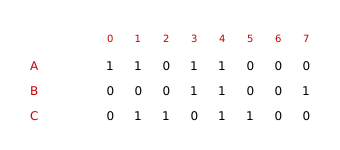
Numbering the bits from left to right, starting at zero, the following SETBIT commands
will create these bitmaps:
> SETBIT A 0 1
(integer) 0
> SETBIT A 1 1
(integer) 0
> SETBIT A 3 1
(integer) 0
> SETBIT A 4 1
(integer) 0
> GET A
"\xd8"
# Hex value: 0xd8 = 0b11011000

> SETBIT B 3 1
(integer) 0
> SETBIT B 4 1
(integer) 0
> SETBIT B 7 1
(integer) 0
> GET B
"\x19"
# Hex value: 0x19 = 0b00011001

> SETBIT C 1 1
(integer) 0
> SETBIT C 2 1
(integer) 0
> SETBIT C 4 1
(integer) 0
> SETBIT C 5 1
(integer) 0
> GET C
"l"
# ASCII "l" = hex 0x6c = 0b01101100r.setbit("A", 0, 1)
r.setbit("A", 1, 1)
r.setbit("A", 3, 1)
r.setbit("A", 4, 1)
res5 = r.get("A")
print("{:08b}".format(int.from_bytes(res5, "big")))
# >>> 11011000
r.setbit("B", 3, 1)
r.setbit("B", 4, 1)
r.setbit("B", 7, 1)
res6 = r.get("B")
print("{:08b}".format(int.from_bytes(res6, "big")))
# >>> 00011001
r.setbit("C", 1, 1)
r.setbit("C", 2, 1)
r.setbit("C", 4, 1)
r.setbit("C", 5, 1)
res7 = r.get("C")
print("{:08b}".format(int.from_bytes(res7, "big")))
# >>> 01101100
await client.setBit("A", 0, 1)
await client.setBit("A", 1, 1)
await client.setBit("A", 3, 1)
await client.setBit("A", 4, 1)

const res5 = await client.get("A")
console.log(res5.readUInt8(0).toString(2).padStart(8, '0'))
// >>> 11011000

await client.setBit("B", 3, 1)
await client.setBit("B", 4, 1)
await client.setBit("B", 7, 1)

const res6 = await client.get("B")
console.log(res6.readUInt8(0).toString(2).padStart(8, '0'))
// >>> 00011001

await client.setBit("C", 1, 1)
await client.setBit("C", 2, 1)
await client.setBit("C", 4, 1)
await client.setBit("C", 5, 1)

const res7 = await client.get("C")
console.log(res7.readUInt8(0).toString(2).padStart(8, '0'))
// >>> 01101100
        jedis.setbit("A", 0, true);
        jedis.setbit("A", 1, true);
        jedis.setbit("A", 3, true);
        jedis.setbit("A", 4, true);

        byte[] res5 = jedis.get("A".getBytes());
        System.out.println(String.format("%8s", Integer.toBinaryString(res5[0] & 0xFF)).replace(' ', '0'));
        // >>> 11011000

        jedis.setbit("B", 3, true);
        jedis.setbit("B", 4, true);
        jedis.setbit("B", 7, true);

        byte[] res6 = jedis.get("B".getBytes());
        System.out.println(String.format("%8s", Integer.toBinaryString(res6[0] & 0xFF)).replace(' ', '0'));
        // >>> 00011001

        jedis.setbit("C", 1, true);
        jedis.setbit("C", 2, true);
        jedis.setbit("C", 4, true);
        jedis.setbit("C", 5, true);

        byte[] res7 = jedis.get("C".getBytes());
        System.out.println(String.format("%8s", Integer.toBinaryString(res7[0] & 0xFF)).replace(' ', '0'));
        // >>> 01101100
            CompletableFuture<Void> setup = async.setbit("A", 0, 1).thenCompose(v -> async.setbit("A", 1, 1))
                    .thenCompose(v -> async.setbit("A", 3, 1)).thenCompose(v -> async.setbit("A", 4, 1))
                    .thenCompose(v -> async.setbit("B", 3, 1)).thenCompose(v -> async.setbit("B", 4, 1))
                    .thenCompose(v -> async.setbit("B", 7, 1)).thenCompose(v -> async.setbit("C", 1, 1))
                    .thenCompose(v -> async.setbit("C", 2, 1)).thenCompose(v -> async.setbit("C", 4, 1))
                    .thenCompose(v -> async.setbit("C", 5, 1)).thenCompose(v -> asyncBytes.get("A".getBytes()))
                    .thenApply(res -> {
                        byte b = (res != null && res.length > 0) ? res[0] : 0;
                        String bitsA = String.format("%8s", Integer.toBinaryString(b & 0xFF)).replace(' ', '0');
                        System.out.println(bitsA); // >>> 11011000
                        return bitsA;
                    }).thenCompose(v -> asyncBytes.get("B".getBytes())).thenApply(res -> {
                        byte b = (res != null && res.length > 0) ? res[0] : 0;
                        String bitsB = String.format("%8s", Integer.toBinaryString(b & 0xFF)).replace(' ', '0');
                        System.out.println(bitsB); // >>> 00011001
                        return bitsB;
                    })
                    // Print C
                    .thenCompose(v -> asyncBytes.get("C".getBytes())).thenAccept(res -> {
                        byte b = (res != null && res.length > 0) ? res[0] : 0;
                        String bitsC = String.format("%8s", Integer.toBinaryString(b & 0xFF)).replace(' ', '0');
                        System.out.println(bitsC); // >>> 01101100
                    }).toCompletableFuture();
-
Sets or clears the bit at offset of the string value. Creates the key if it doesn't exist.
-
setbit(
- key: K, // the key.
- offset: long, // the offset type: long.
- value: int // the value type: string.
-
setbit(
            Mono<Void> setup = reactive.setbit("A", 0, 1).then(reactive.setbit("A", 1, 1)).then(reactive.setbit("A", 3, 1))
                    .then(reactive.setbit("A", 4, 1)).then(reactive.setbit("B", 3, 1)).then(reactive.setbit("B", 4, 1))
                    .then(reactive.setbit("B", 7, 1)).then(reactive.setbit("C", 1, 1)).then(reactive.setbit("C", 2, 1))
                    .then(reactive.setbit("C", 4, 1)).then(reactive.setbit("C", 5, 1)).then(reactiveBytes.get("A".getBytes()))
                    .doOnNext(res -> {
                        byte b = (res != null && res.length > 0) ? res[0] : 0;
                        String bitsA = String.format("%8s", Integer.toBinaryString(b & 0xFF)).replace(' ', '0');
                        System.out.println(bitsA); // >>> 11011000
                    }).then(reactiveBytes.get("B".getBytes())).doOnNext(res -> {
                        byte b = (res != null && res.length > 0) ? res[0] : 0;
                        String bitsB = String.format("%8s", Integer.toBinaryString(b & 0xFF)).replace(' ', '0');
                        System.out.println(bitsB); // >>> 00011001
                    }).then(reactiveBytes.get("C".getBytes())).doOnNext(res -> {
                        byte b = (res != null && res.length > 0) ? res[0] : 0;
                        String bitsC = String.format("%8s", Integer.toBinaryString(b & 0xFF)).replace(' ', '0');
                        System.out.println(bitsC); // >>> 01101100
                    }).then();
-
Sets or clears the bit at offset of the string value. Creates the key if it doesn't exist.
-
setbit(
- key: K, // the key.
- offset: long, // the offset type: long.
- value: int // the value type: string.
-
setbit(
	rdb.SetBit(ctx, "A", 0, 1)
	rdb.SetBit(ctx, "A", 1, 1)
	rdb.SetBit(ctx, "A", 3, 1)
	rdb.SetBit(ctx, "A", 4, 1)
	ba, _ := rdb.Get(ctx, "A").Bytes()
	fmt.Printf("%08b\n", ba[0])
	// >>> 11011000

	rdb.SetBit(ctx, "B", 3, 1)
	rdb.SetBit(ctx, "B", 4, 1)
	rdb.SetBit(ctx, "B", 7, 1)
	bb, _ := rdb.Get(ctx, "B").Bytes()
	fmt.Printf("%08b\n", bb[0])
	// >>> 00011001

	rdb.SetBit(ctx, "C", 1, 1)
	rdb.SetBit(ctx, "C", 2, 1)
	rdb.SetBit(ctx, "C", 4, 1)
	rdb.SetBit(ctx, "C", 5, 1)
	bc, _ := rdb.Get(ctx, "C").Bytes()
	fmt.Printf("%08b\n", bc[0])
	// >>> 01101100
// Bitwise operations are not supported in NRedisStack.
-
Sets or clears the bit at offset of the string value. Creates the key if it doesn't exist.
-
StringSetBit(
- key: RedisKey, // The key of the string.
- offset: long, // The offset in the string to set bit.
- bit: bool, // The bit value to set, true for 1, false for 0.
- flags: CommandFlags // The flags to use for this operation.
-
StringSetBitAsync(
- key: RedisKey,
- offset: long,
- bit: bool,
- flags: CommandFlags
-
StringSetBit(
- key: RedisKey, // The key of the string.
- offset: long, // The offset in the string to set bit.
- bit: bool, // The bit value to set, true for 1, false for 0.
- flags: CommandFlags // The flags to use for this operation.
-
StringSetBitAsync(
- key: RedisKey,
- offset: long,
- value: bool,
- flags: CommandFlags
-
StringSetBit(
-
Returns the string value of a key.
-
StringGet(
- key: RedisKey,
- flags: CommandFlags // The flags to use for this operation.
-
StringGet(
- keys: RedisKey[], // The keys of the strings.
- flags: CommandFlags // The flags to use for this operation.
-
StringGet(
- key: Any,
- flags: Any // The flags to use for this operation.
-
StringGet(
- key: RedisKey,
- flags: CommandFlags // The flags to use for this operation.
-
StringGet(
- keys: RedisKey[], // The keys of the strings.
- flags: CommandFlags // The flags to use for this operation.
-
StringGet(
        $r->setbit('A', 0, 1);
        $r->setbit('A', 1, 1);
        $r->setbit('A', 3, 1);
        $r->setbit('A', 4, 1);

        $res5 = $r->get('A');
        echo str_pad(decbin(ord($res5)), 8, '0', STR_PAD_LEFT) . PHP_EOL;
        // >>> 11011000

        $r->setbit('B', 3, 1);
        $r->setbit('B', 4, 1);
        $r->setbit('B', 7, 1);

        $res6 = $r->get('B');
        echo str_pad(decbin(ord($res6)), 8, '0', STR_PAD_LEFT) . PHP_EOL;
        // >>> 00011001

        $r->setbit('C', 1, 1);
        $r->setbit('C', 2, 1);
        $r->setbit('C', 4, 1);
        $r->setbit('C', 5, 1);

        $res7 = $r->get('C');
        echo str_pad(decbin(ord($res7)), 8, '0', STR_PAD_LEFT) . PHP_EOL;
        // >>> 01101100
AND
Set a bit in the destination key to 1 only if it is set in all the source keys.
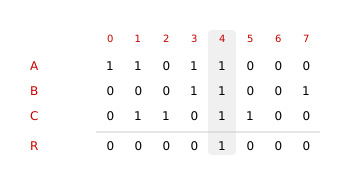
> BITOP AND R A B C
(integer) 1
> GET R
"\b"
# ASCII "\b" (backspace) = hex 0x08 = 0b00001000r.bitop("AND", "R", "A", "B", "C")
res8 = r.get("R")
print("{:08b}".format(int.from_bytes(res8, "big")))
# >>> 00001000
await client.bitOp("AND", "R", ["A", "B", "C"])
const res8 = await client.get("R")
console.log(res8.readUInt8(0).toString(2).padStart(8, '0'))
// >>> 00001000
        jedis.bitop(BitOP.AND, "R", "A", "B", "C");
        byte[] res8 = jedis.get("R".getBytes());
        System.out.println(String.format("%8s", Integer.toBinaryString(res8[0] & 0xFF)).replace(' ', '0'));
        // >>> 00001000
            CompletableFuture<Void> andOp = async.bitopAnd("R", "A", "B", "C")
                    .thenCompose(len -> asyncBytes.get("R".getBytes())).thenAccept(res -> {
                        byte b = (res != null && res.length > 0) ? res[0] : 0;
                        String bits = String.format("%8s", Integer.toBinaryString(b & 0xFF)).replace(' ', '0');
                        System.out.println(bits); // >>> 00001000
                    }).toCompletableFuture();
-
Performs bitwise operations on multiple strings, and stores the result.
-
bitopAnd(
- destination: K, // result key of the operation.
- keys: K... // operation input key names.
-
bitopNot(
- destination: K, // result key of the operation.
- source: K // operation input key names.
-
bitopOr(
- destination: K, // result key of the operation.
- keys: K... // operation input key names.
-
bitopXor(
- destination: K, // result key of the operation.
- keys: K... // operation input key names.
-
bitopDiff(
- destination: K, // result key of the operation.
- sourceKey: K, // the source key (X) for comparison.
- keys: K... // one or more additional keys (Y1, Y2, ...). At least one key is required.
-
bitopAnd(
            Mono<Void> andOp = reactive.bitopAnd("R", "A", "B", "C").then(reactiveBytes.get("R".getBytes())).doOnNext(res -> {
                byte b = (res != null && res.length > 0) ? res[0] : 0;
                String bits = String.format("%8s", Integer.toBinaryString(b & 0xFF)).replace(' ', '0');
                System.out.println(bits); // >>> 00001000
            }).then();
-
Performs bitwise operations on multiple strings, and stores the result.
-
bitopAnd(
- destination: K, // result key of the operation.
- keys: K... // operation input key names.
-
bitopNot(
- destination: K, // result key of the operation.
- source: K // operation input key names.
-
bitopOr(
- destination: K, // result key of the operation.
- keys: K... // operation input key names.
-
bitopXor(
- destination: K, // result key of the operation.
- keys: K... // operation input key names.
-
bitopDiff(
- destination: K, // result key of the operation.
- sourceKey: K, // the source key (X) for comparison.
- keys: K... // one or more additional keys (Y1, Y2, ...). At least one key is required.
-
bitopAnd(
	rdb.BitOpAnd(ctx, "R", "A", "B", "C")
	br, _ := rdb.Get(ctx, "R").Bytes()
	fmt.Printf("%08b\n", br[0])
	// >>> 00001000
-
Performs bitwise operations on multiple strings, and stores the result.
-
bitOp(
- ctx: context.Context,
- op: Any,
- destKey: string,
- keys: ...string
-
BitOpAnd(
- ctx: context.Context,
- destKey: string,
- keys: ...string
-
BitOpOr(
- ctx: context.Context,
- destKey: string,
- keys: ...string
-
BitOpXor(
- ctx: context.Context,
- destKey: string,
- keys: ...string
-
BitOpNot(
- ctx: context.Context,
- destKey: string,
- key: string
-
bitOp(
// Bitwise operations are not supported in NRedisStack.
-
Performs bitwise operations on multiple strings, and stores the result.
-
StringBitOperation(
- operation: Bitwise, // The operation to perform.
- destination: RedisKey, // The destination key to store the result in.
- first: RedisKey,
- second: RedisKey,
- flags: CommandFlags // The flags to use for this operation.
-
StringBitOperation(
- operation: Bitwise, // The operation to perform.
- destination: RedisKey, // The destination key to store the result in.
- keys: RedisKey[], // The keys to get the bit values from.
- flags: CommandFlags // The flags to use for this operation.
-
StringBitOperationAsync(
- operation: Bitwise,
- destination: RedisKey,
- first: RedisKey,
- second: RedisKey,
- flags: CommandFlags
-
StringBitOperationAsync(
- operation: Bitwise,
- destination: RedisKey,
- keys: RedisKey[],
- flags: CommandFlags
-
StringBitOperation(
- operation: Bitwise, // The operation to perform.
- destination: RedisKey, // The destination key to store the result in.
- first: RedisKey,
- second: RedisKey,
- flags: CommandFlags // The flags to use for this operation.
-
StringBitOperation(
-
Returns the string value of a key.
-
StringGet(
- key: RedisKey,
- flags: CommandFlags // The flags to use for this operation.
-
StringGet(
- keys: RedisKey[], // The keys of the strings.
- flags: CommandFlags // The flags to use for this operation.
-
StringGet(
- key: Any,
- flags: Any // The flags to use for this operation.
-
StringGet(
- key: RedisKey,
- flags: CommandFlags // The flags to use for this operation.
-
StringGet(
- keys: RedisKey[], // The keys of the strings.
- flags: CommandFlags // The flags to use for this operation.
-
StringGet(
        $r->bitop('AND', 'R', 'A', 'B', 'C');
        $res8 = $r->get('R');
        echo str_pad(decbin(ord($res8)), 8, '0', STR_PAD_LEFT) . PHP_EOL;
        // >>> 00001000
OR
Set a bit in the destination key to 1 if it is set in at least one of the source keys.

> BITOP OR R A B C
(integer) 1
> GET R
"\xfd"
# Hex value: 0xfd = 0b11111101r.bitop("OR", "R", "A", "B", "C")
res9 = r.get("R")
print("{:08b}".format(int.from_bytes(res9, "big")))
# >>> 11111101
await client.bitOp("OR", "R", ["A", "B", "C"])
const res9 = await client.get("R")
console.log(res9.readUInt8(0).toString(2).padStart(8, '0'))
// >>> 11111101
        jedis.bitop(BitOP.OR, "R", "A", "B", "C");
        byte[] res9 = jedis.get("R".getBytes());
        System.out.println(String.format("%8s", Integer.toBinaryString(res9[0] & 0xFF)).replace(' ', '0'));
        // >>> 11111101
            CompletableFuture<Void> orOp = async.bitopOr("R", "A", "B", "C").thenCompose(len -> asyncBytes.get("R".getBytes()))
                    .thenAccept(res -> {
                        byte b = (res != null && res.length > 0) ? res[0] : 0;
                        String bits = String.format("%8s", Integer.toBinaryString(b & 0xFF)).replace(' ', '0');
                        System.out.println(bits); // >>> 11111101
                    }).toCompletableFuture();
-
Performs bitwise operations on multiple strings, and stores the result.
-
bitopAnd(
- destination: K, // result key of the operation.
- keys: K... // operation input key names.
-
bitopNot(
- destination: K, // result key of the operation.
- source: K // operation input key names.
-
bitopOr(
- destination: K, // result key of the operation.
- keys: K... // operation input key names.
-
bitopXor(
- destination: K, // result key of the operation.
- keys: K... // operation input key names.
-
bitopDiff(
- destination: K, // result key of the operation.
- sourceKey: K, // the source key (X) for comparison.
- keys: K... // one or more additional keys (Y1, Y2, ...). At least one key is required.
-
bitopAnd(
            Mono<Void> orOp = reactive.bitopOr("R", "A", "B", "C").then(reactiveBytes.get("R".getBytes())).doOnNext(res -> {
                byte b = (res != null && res.length > 0) ? res[0] : 0;
                String bits = String.format("%8s", Integer.toBinaryString(b & 0xFF)).replace(' ', '0');
                System.out.println(bits); // >>> 11111101
            }).then();
-
Performs bitwise operations on multiple strings, and stores the result.
-
bitopAnd(
- destination: K, // result key of the operation.
- keys: K... // operation input key names.
-
bitopNot(
- destination: K, // result key of the operation.
- source: K // operation input key names.
-
bitopOr(
- destination: K, // result key of the operation.
- keys: K... // operation input key names.
-
bitopXor(
- destination: K, // result key of the operation.
- keys: K... // operation input key names.
-
bitopDiff(
- destination: K, // result key of the operation.
- sourceKey: K, // the source key (X) for comparison.
- keys: K... // one or more additional keys (Y1, Y2, ...). At least one key is required.
-
bitopAnd(
	rdb.BitOpOr(ctx, "R", "A", "B", "C")
	br, _ = rdb.Get(ctx, "R").Bytes()
	fmt.Printf("%08b\n", br[0])
	// >>> 11111101
-
Performs bitwise operations on multiple strings, and stores the result.
-
bitOp(
- ctx: context.Context,
- op: Any,
- destKey: string,
- keys: ...string
-
BitOpAnd(
- ctx: context.Context,
- destKey: string,
- keys: ...string
-
BitOpOr(
- ctx: context.Context,
- destKey: string,
- keys: ...string
-
BitOpXor(
- ctx: context.Context,
- destKey: string,
- keys: ...string
-
BitOpNot(
- ctx: context.Context,
- destKey: string,
- key: string
-
bitOp(
// Bitwise operations are not supported in NRedisStack.
-
Performs bitwise operations on multiple strings, and stores the result.
-
StringBitOperation(
- operation: Bitwise, // The operation to perform.
- destination: RedisKey, // The destination key to store the result in.
- first: RedisKey,
- second: RedisKey,
- flags: CommandFlags // The flags to use for this operation.
-
StringBitOperation(
- operation: Bitwise, // The operation to perform.
- destination: RedisKey, // The destination key to store the result in.
- keys: RedisKey[], // The keys to get the bit values from.
- flags: CommandFlags // The flags to use for this operation.
-
StringBitOperationAsync(
- operation: Bitwise,
- destination: RedisKey,
- first: RedisKey,
- second: RedisKey,
- flags: CommandFlags
-
StringBitOperationAsync(
- operation: Bitwise,
- destination: RedisKey,
- keys: RedisKey[],
- flags: CommandFlags
-
StringBitOperation(
- operation: Bitwise, // The operation to perform.
- destination: RedisKey, // The destination key to store the result in.
- first: RedisKey,
- second: RedisKey,
- flags: CommandFlags // The flags to use for this operation.
-
StringBitOperation(
-
Returns the string value of a key.
-
StringGet(
- key: RedisKey,
- flags: CommandFlags // The flags to use for this operation.
-
StringGet(
- keys: RedisKey[], // The keys of the strings.
- flags: CommandFlags // The flags to use for this operation.
-
StringGet(
- key: Any,
- flags: Any // The flags to use for this operation.
-
StringGet(
- key: RedisKey,
- flags: CommandFlags // The flags to use for this operation.
-
StringGet(
- keys: RedisKey[], // The keys of the strings.
- flags: CommandFlags // The flags to use for this operation.
-
StringGet(
        $r->bitop('OR', 'R', 'A', 'B', 'C');
        $res9 = $r->get('R');
        echo str_pad(decbin(ord($res9)), 8, '0', STR_PAD_LEFT) . PHP_EOL;
        // >>> 11111101
XOR
For two source keys, set a bit in the destination key to 1 if the value of the bit is different in the two keys. For three or more source keys, the result of XORing the first two keys is then XORed with the next key, and so forth.

> BITOP XOR R A B
(integer) 1
> GET R
"\xc1"
# Hex value: 0xc1 = 0b11000001r.bitop("XOR", "R", "A", "B")
res10 = r.get("R")
print("{:08b}".format(int.from_bytes(res10, "big")))
# >>> 11000001
await client.bitOp("XOR", "R", ["A", "B"]) // XOR uses two keys here
const res10 = await client.get("R")
console.log(res10.readUInt8(0).toString(2).padStart(8, '0'))
// >>> 11000001
        jedis.bitop(BitOP.XOR, "R", "A", "B");
        byte[] res10 = jedis.get("R".getBytes());
        System.out.println(String.format("%8s", Integer.toBinaryString(res10[0] & 0xFF)).replace(' ', '0'));
        // >>> 11000001
            CompletableFuture<Void> xorOp = async.bitopXor("R", "A", "B").thenCompose(len -> asyncBytes.get("R".getBytes()))
                    .thenAccept(res -> {
                        byte b = (res != null && res.length > 0) ? res[0] : 0;
                        String bits = String.format("%8s", Integer.toBinaryString(b & 0xFF)).replace(' ', '0');
                        System.out.println(bits); // >>> 11000001
                    }).toCompletableFuture();
-
Performs bitwise operations on multiple strings, and stores the result.
-
bitopAnd(
- destination: K, // result key of the operation.
- keys: K... // operation input key names.
-
bitopNot(
- destination: K, // result key of the operation.
- source: K // operation input key names.
-
bitopOr(
- destination: K, // result key of the operation.
- keys: K... // operation input key names.
-
bitopXor(
- destination: K, // result key of the operation.
- keys: K... // operation input key names.
-
bitopDiff(
- destination: K, // result key of the operation.
- sourceKey: K, // the source key (X) for comparison.
- keys: K... // one or more additional keys (Y1, Y2, ...). At least one key is required.
-
bitopAnd(
            Mono<Void> xorOp = reactive.bitopXor("R", "A", "B").then(reactiveBytes.get("R".getBytes())).doOnNext(res -> {
                byte b = (res != null && res.length > 0) ? res[0] : 0;
                String bits = String.format("%8s", Integer.toBinaryString(b & 0xFF)).replace(' ', '0');
                System.out.println(bits); // >>> 11000001
            }).then();
-
Performs bitwise operations on multiple strings, and stores the result.
-
bitopAnd(
- destination: K, // result key of the operation.
- keys: K... // operation input key names.
-
bitopNot(
- destination: K, // result key of the operation.
- source: K // operation input key names.
-
bitopOr(
- destination: K, // result key of the operation.
- keys: K... // operation input key names.
-
bitopXor(
- destination: K, // result key of the operation.
- keys: K... // operation input key names.
-
bitopDiff(
- destination: K, // result key of the operation.
- sourceKey: K, // the source key (X) for comparison.
- keys: K... // one or more additional keys (Y1, Y2, ...). At least one key is required.
-
bitopAnd(
	rdb.BitOpXor(ctx, "R", "A", "B")
	br, _ = rdb.Get(ctx, "R").Bytes()
	fmt.Printf("%08b\n", br[0])
	// >>> 11000001
-
Performs bitwise operations on multiple strings, and stores the result.
-
bitOp(
- ctx: context.Context,
- op: Any,
- destKey: string,
- keys: ...string
-
BitOpAnd(
- ctx: context.Context,
- destKey: string,
- keys: ...string
-
BitOpOr(
- ctx: context.Context,
- destKey: string,
- keys: ...string
-
BitOpXor(
- ctx: context.Context,
- destKey: string,
- keys: ...string
-
BitOpNot(
- ctx: context.Context,
- destKey: string,
- key: string
-
bitOp(
// Bitwise operations are not supported in NRedisStack.
-
Performs bitwise operations on multiple strings, and stores the result.
-
StringBitOperation(
- operation: Bitwise, // The operation to perform.
- destination: RedisKey, // The destination key to store the result in.
- first: RedisKey,
- second: RedisKey,
- flags: CommandFlags // The flags to use for this operation.
-
StringBitOperation(
- operation: Bitwise, // The operation to perform.
- destination: RedisKey, // The destination key to store the result in.
- keys: RedisKey[], // The keys to get the bit values from.
- flags: CommandFlags // The flags to use for this operation.
-
StringBitOperationAsync(
- operation: Bitwise,
- destination: RedisKey,
- first: RedisKey,
- second: RedisKey,
- flags: CommandFlags
-
StringBitOperationAsync(
- operation: Bitwise,
- destination: RedisKey,
- keys: RedisKey[],
- flags: CommandFlags
-
StringBitOperation(
- operation: Bitwise, // The operation to perform.
- destination: RedisKey, // The destination key to store the result in.
- first: RedisKey,
- second: RedisKey,
- flags: CommandFlags // The flags to use for this operation.
-
StringBitOperation(
-
Returns the string value of a key.
-
StringGet(
- key: RedisKey,
- flags: CommandFlags // The flags to use for this operation.
-
StringGet(
- keys: RedisKey[], // The keys of the strings.
- flags: CommandFlags // The flags to use for this operation.
-
StringGet(
- key: Any,
- flags: Any // The flags to use for this operation.
-
StringGet(
- key: RedisKey,
- flags: CommandFlags // The flags to use for this operation.
-
StringGet(
- keys: RedisKey[], // The keys of the strings.
- flags: CommandFlags // The flags to use for this operation.
-
StringGet(
        $r->bitop('XOR', 'R', 'A', 'B');
        $res10 = $r->get('R');
        echo str_pad(decbin(ord($res10)), 8, '0', STR_PAD_LEFT) . PHP_EOL;
        // >>> 11000001
NOT
Set a bit in the destination key to 1 if it is not set in the source key (this is the only unary operator).

> BITOP NOT R A
(integer) 1
> GET R
"'"
# ASCII "'" (single quote) = hex 0x27 = 0b00100111r.bitop("NOT", "R", "A")
res11 = r.get("R")
print("{:08b}".format(int.from_bytes(res11, "big")))
# >>> 00100111
await client.bitOp("NOT", "R", "A")
const res11 = await client.get("R")
console.log(res11.readUInt8(0).toString(2).padStart(8, '0'))
// >>> 00100111
        jedis.bitop(BitOP.NOT, "R", "A");
        byte[] res11 = jedis.get("R".getBytes());
        System.out.println(String.format("%8s", Integer.toBinaryString(res11[0] & 0xFF)).replace(' ', '0'));
        // >>> 00100111
            CompletableFuture<Void> notOp = async.bitopNot("R", "A").thenCompose(len -> asyncBytes.get("R".getBytes()))
                    .thenAccept(res -> {
                        byte b = (res != null && res.length > 0) ? res[0] : 0;
                        String bits = String.format("%8s", Integer.toBinaryString(b & 0xFF)).replace(' ', '0');
                        System.out.println(bits); // >>> 00100111
                    }).toCompletableFuture();
-
Performs bitwise operations on multiple strings, and stores the result.
-
bitopAnd(
- destination: K, // result key of the operation.
- keys: K... // operation input key names.
-
bitopNot(
- destination: K, // result key of the operation.
- source: K // operation input key names.
-
bitopOr(
- destination: K, // result key of the operation.
- keys: K... // operation input key names.
-
bitopXor(
- destination: K, // result key of the operation.
- keys: K... // operation input key names.
-
bitopDiff(
- destination: K, // result key of the operation.
- sourceKey: K, // the source key (X) for comparison.
- keys: K... // one or more additional keys (Y1, Y2, ...). At least one key is required.
-
bitopAnd(
            Mono<Void> notOp = reactive.bitopNot("R", "A").then(reactiveBytes.get("R".getBytes())).doOnNext(res -> {
                byte b = (res != null && res.length > 0) ? res[0] : 0;
                String bits = String.format("%8s", Integer.toBinaryString(b & 0xFF)).replace(' ', '0');
                System.out.println(bits); // >>> 00100111
            }).then();
-
Performs bitwise operations on multiple strings, and stores the result.
-
bitopAnd(
- destination: K, // result key of the operation.
- keys: K... // operation input key names.
-
bitopNot(
- destination: K, // result key of the operation.
- source: K // operation input key names.
-
bitopOr(
- destination: K, // result key of the operation.
- keys: K... // operation input key names.
-
bitopXor(
- destination: K, // result key of the operation.
- keys: K... // operation input key names.
-
bitopDiff(
- destination: K, // result key of the operation.
- sourceKey: K, // the source key (X) for comparison.
- keys: K... // one or more additional keys (Y1, Y2, ...). At least one key is required.
-
bitopAnd(
	rdb.BitOpNot(ctx, "R", "A")
	br, _ = rdb.Get(ctx, "R").Bytes()
	fmt.Printf("%08b\n", br[0])
	// >>> 00100111
-
Performs bitwise operations on multiple strings, and stores the result.
-
bitOp(
- ctx: context.Context,
- op: Any,
- destKey: string,
- keys: ...string
-
BitOpAnd(
- ctx: context.Context,
- destKey: string,
- keys: ...string
-
BitOpOr(
- ctx: context.Context,
- destKey: string,
- keys: ...string
-
BitOpXor(
- ctx: context.Context,
- destKey: string,
- keys: ...string
-
BitOpNot(
- ctx: context.Context,
- destKey: string,
- key: string
-
bitOp(
// Bitwise operations are not supported in NRedisStack.
-
Performs bitwise operations on multiple strings, and stores the result.
-
StringBitOperation(
- operation: Bitwise, // The operation to perform.
- destination: RedisKey, // The destination key to store the result in.
- first: RedisKey,
- second: RedisKey,
- flags: CommandFlags // The flags to use for this operation.
-
StringBitOperation(
- operation: Bitwise, // The operation to perform.
- destination: RedisKey, // The destination key to store the result in.
- keys: RedisKey[], // The keys to get the bit values from.
- flags: CommandFlags // The flags to use for this operation.
-
StringBitOperationAsync(
- operation: Bitwise,
- destination: RedisKey,
- first: RedisKey,
- second: RedisKey,
- flags: CommandFlags
-
StringBitOperationAsync(
- operation: Bitwise,
- destination: RedisKey,
- keys: RedisKey[],
- flags: CommandFlags
-
StringBitOperation(
- operation: Bitwise, // The operation to perform.
- destination: RedisKey, // The destination key to store the result in.
- first: RedisKey,
- second: RedisKey,
- flags: CommandFlags // The flags to use for this operation.
-
StringBitOperation(
-
Returns the string value of a key.
-
StringGet(
- key: RedisKey,
- flags: CommandFlags // The flags to use for this operation.
-
StringGet(
- keys: RedisKey[], // The keys of the strings.
- flags: CommandFlags // The flags to use for this operation.
-
StringGet(
- key: Any,
- flags: Any // The flags to use for this operation.
-
StringGet(
- key: RedisKey,
- flags: CommandFlags // The flags to use for this operation.
-
StringGet(
- keys: RedisKey[], // The keys of the strings.
- flags: CommandFlags // The flags to use for this operation.
-
StringGet(
        $r->bitop('NOT', 'R', 'A');
        $res11 = $r->get('R');
        echo str_pad(decbin(ord($res11)), 8, '0', STR_PAD_LEFT) . PHP_EOL;
        // >>> 00100111
DIFF
Set a bit in the destination key to 1 if it is set in the first source key, but not in any of the other source keys.
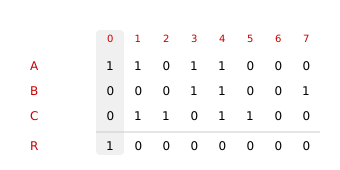
> BITOP DIFF R A B C
(integer) 1
> GET R
"\x80"
# Hex value: 0x80 = 0b10000000r.bitop("DIFF", "R", "A", "B", "C")
res12 = r.get("R")
print("{:08b}".format(int.from_bytes(res12, "big")))
# >>> 10000000
await client.bitOp("DIFF", "R", ["A", "B", "C"])
const res12 = await client.get("R")
console.log(res12.readUInt8(0).toString(2).padStart(8, '0'))
// >>> 10000000
        jedis.bitop(BitOP.DIFF, "R", "A", "B", "C");
        byte[] res12 = jedis.get("R".getBytes());
        System.out.println(String.format("%8s", Integer.toBinaryString(res12[0] & 0xFF)).replace(' ', '0'));
        // >>> 10000000
            CompletableFuture<Void> diffOp = async.bitopDiff("R", "A", "B", "C")
                    .thenCompose(len -> asyncBytes.get("R".getBytes())).thenAccept(res -> {
                        byte b = (res != null && res.length > 0) ? res[0] : 0;
                        String bits = String.format("%8s", Integer.toBinaryString(b & 0xFF)).replace(' ', '0');
                        System.out.println(bits); // >>> 10000000
                    }).toCompletableFuture();
-
Performs bitwise operations on multiple strings, and stores the result.
-
bitopAnd(
- destination: K, // result key of the operation.
- keys: K... // operation input key names.
-
bitopNot(
- destination: K, // result key of the operation.
- source: K // operation input key names.
-
bitopOr(
- destination: K, // result key of the operation.
- keys: K... // operation input key names.
-
bitopXor(
- destination: K, // result key of the operation.
- keys: K... // operation input key names.
-
bitopDiff(
- destination: K, // result key of the operation.
- sourceKey: K, // the source key (X) for comparison.
- keys: K... // one or more additional keys (Y1, Y2, ...). At least one key is required.
-
bitopAnd(
            Mono<Void> diffOp = reactive.bitopDiff("R", "A", "B", "C").then(reactiveBytes.get("R".getBytes())).doOnNext(res -> {
                byte b = (res != null && res.length > 0) ? res[0] : 0;
                String bits = String.format("%8s", Integer.toBinaryString(b & 0xFF)).replace(' ', '0');
                System.out.println(bits); // >>> 10000000
            }).then();
-
Performs bitwise operations on multiple strings, and stores the result.
-
bitopAnd(
- destination: K, // result key of the operation.
- keys: K... // operation input key names.
-
bitopNot(
- destination: K, // result key of the operation.
- source: K // operation input key names.
-
bitopOr(
- destination: K, // result key of the operation.
- keys: K... // operation input key names.
-
bitopXor(
- destination: K, // result key of the operation.
- keys: K... // operation input key names.
-
bitopDiff(
- destination: K, // result key of the operation.
- sourceKey: K, // the source key (X) for comparison.
- keys: K... // one or more additional keys (Y1, Y2, ...). At least one key is required.
-
bitopAnd(
	rdb.BitOpDiff(ctx, "R", "A", "B", "C")
	br, _ = rdb.Get(ctx, "R").Bytes()
	fmt.Printf("%08b\n", br[0])
	// >>> 10000000
-
Performs bitwise operations on multiple strings, and stores the result.
-
bitOp(
- ctx: context.Context,
- op: Any,
- destKey: string,
- keys: ...string
-
BitOpAnd(
- ctx: context.Context,
- destKey: string,
- keys: ...string
-
BitOpOr(
- ctx: context.Context,
- destKey: string,
- keys: ...string
-
BitOpXor(
- ctx: context.Context,
- destKey: string,
- keys: ...string
-
BitOpNot(
- ctx: context.Context,
- destKey: string,
- key: string
-
bitOp(
// Bitwise operations are not supported in NRedisStack.
-
Performs bitwise operations on multiple strings, and stores the result.
-
StringBitOperation(
- operation: Bitwise, // The operation to perform.
- destination: RedisKey, // The destination key to store the result in.
- first: RedisKey,
- second: RedisKey,
- flags: CommandFlags // The flags to use for this operation.
-
StringBitOperation(
- operation: Bitwise, // The operation to perform.
- destination: RedisKey, // The destination key to store the result in.
- keys: RedisKey[], // The keys to get the bit values from.
- flags: CommandFlags // The flags to use for this operation.
-
StringBitOperationAsync(
- operation: Bitwise,
- destination: RedisKey,
- first: RedisKey,
- second: RedisKey,
- flags: CommandFlags
-
StringBitOperationAsync(
- operation: Bitwise,
- destination: RedisKey,
- keys: RedisKey[],
- flags: CommandFlags
-
StringBitOperation(
- operation: Bitwise, // The operation to perform.
- destination: RedisKey, // The destination key to store the result in.
- first: RedisKey,
- second: RedisKey,
- flags: CommandFlags // The flags to use for this operation.
-
StringBitOperation(
-
Returns the string value of a key.
-
StringGet(
- key: RedisKey,
- flags: CommandFlags // The flags to use for this operation.
-
StringGet(
- keys: RedisKey[], // The keys of the strings.
- flags: CommandFlags // The flags to use for this operation.
-
StringGet(
- key: Any,
- flags: Any // The flags to use for this operation.
-
StringGet(
- key: RedisKey,
- flags: CommandFlags // The flags to use for this operation.
-
StringGet(
- keys: RedisKey[], // The keys of the strings.
- flags: CommandFlags // The flags to use for this operation.
-
StringGet(
        $r->bitop('DIFF', 'R', 'A', 'B', 'C');
        $res12 = $r->get('R');
        echo str_pad(decbin(ord($res12)), 8, '0', STR_PAD_LEFT) . PHP_EOL;
        // >>> 10000000
DIFF1
Set a bit in the destination key to 1 if it is not set in the first source key, but set in at least one of the other source keys.

> BITOP DIFF1 R A B C
(integer) 1
> GET R
"%"
# ASCII "%" (percent) = hex 0x25 = 0b00100101r.bitop("DIFF1", "R", "A", "B", "C")
res13 = r.get("R")
print("{:08b}".format(int.from_bytes(res13, "big")))
# >>> 00100101
await client.bitOp("DIFF1", "R", ["A", "B", "C"])
const res13 = await client.get("R")
console.log(res13.readUInt8(0).toString(2).padStart(8, '0'))
// >>> 00100101
        jedis.bitop(BitOP.DIFF1, "R", "A", "B", "C");
        byte[] res13 = jedis.get("R".getBytes());
        System.out.println(String.format("%8s", Integer.toBinaryString(res13[0] & 0xFF)).replace(' ', '0'));
        // >>> 00100101
            CompletableFuture<Void> diff1Op = async.bitopDiff1("R", "A", "B", "C")
                    .thenCompose(len -> asyncBytes.get("R".getBytes())).thenAccept(res -> {
                        byte b = (res != null && res.length > 0) ? res[0] : 0;
                        String bits = String.format("%8s", Integer.toBinaryString(b & 0xFF)).replace(' ', '0');
                        System.out.println(bits); // >>> 00100101
                    }).toCompletableFuture();
-
Performs bitwise operations on multiple strings, and stores the result.
-
bitopAnd(
- destination: K, // result key of the operation.
- keys: K... // operation input key names.
-
bitopNot(
- destination: K, // result key of the operation.
- source: K // operation input key names.
-
bitopOr(
- destination: K, // result key of the operation.
- keys: K... // operation input key names.
-
bitopXor(
- destination: K, // result key of the operation.
- keys: K... // operation input key names.
-
bitopDiff(
- destination: K, // result key of the operation.
- sourceKey: K, // the source key (X) for comparison.
- keys: K... // one or more additional keys (Y1, Y2, ...). At least one key is required.
-
bitopAnd(
            Mono<Void> diff1Op = reactive.bitopDiff1("R", "A", "B", "C").then(reactiveBytes.get("R".getBytes()))
                    .doOnNext(res -> {
                        byte b = (res != null && res.length > 0) ? res[0] : 0;
                        String bits = String.format("%8s", Integer.toBinaryString(b & 0xFF)).replace(' ', '0');
                        System.out.println(bits); // >>> 00100101
                    }).then();
-
Performs bitwise operations on multiple strings, and stores the result.
-
bitopAnd(
- destination: K, // result key of the operation.
- keys: K... // operation input key names.
-
bitopNot(
- destination: K, // result key of the operation.
- source: K // operation input key names.
-
bitopOr(
- destination: K, // result key of the operation.
- keys: K... // operation input key names.
-
bitopXor(
- destination: K, // result key of the operation.
- keys: K... // operation input key names.
-
bitopDiff(
- destination: K, // result key of the operation.
- sourceKey: K, // the source key (X) for comparison.
- keys: K... // one or more additional keys (Y1, Y2, ...). At least one key is required.
-
bitopAnd(
	rdb.BitOpDiff1(ctx, "R", "A", "B", "C")
	br, _ = rdb.Get(ctx, "R").Bytes()
	fmt.Printf("%08b\n", br[0])
	// >>> 00100101
-
Performs bitwise operations on multiple strings, and stores the result.
-
bitOp(
- ctx: context.Context,
- op: Any,
- destKey: string,
- keys: ...string
-
BitOpAnd(
- ctx: context.Context,
- destKey: string,
- keys: ...string
-
BitOpOr(
- ctx: context.Context,
- destKey: string,
- keys: ...string
-
BitOpXor(
- ctx: context.Context,
- destKey: string,
- keys: ...string
-
BitOpNot(
- ctx: context.Context,
- destKey: string,
- key: string
-
bitOp(
// Bitwise operations are not supported in NRedisStack.
-
Performs bitwise operations on multiple strings, and stores the result.
-
StringBitOperation(
- operation: Bitwise, // The operation to perform.
- destination: RedisKey, // The destination key to store the result in.
- first: RedisKey,
- second: RedisKey,
- flags: CommandFlags // The flags to use for this operation.
-
StringBitOperation(
- operation: Bitwise, // The operation to perform.
- destination: RedisKey, // The destination key to store the result in.
- keys: RedisKey[], // The keys to get the bit values from.
- flags: CommandFlags // The flags to use for this operation.
-
StringBitOperationAsync(
- operation: Bitwise,
- destination: RedisKey,
- first: RedisKey,
- second: RedisKey,
- flags: CommandFlags
-
StringBitOperationAsync(
- operation: Bitwise,
- destination: RedisKey,
- keys: RedisKey[],
- flags: CommandFlags
-
StringBitOperation(
- operation: Bitwise, // The operation to perform.
- destination: RedisKey, // The destination key to store the result in.
- first: RedisKey,
- second: RedisKey,
- flags: CommandFlags // The flags to use for this operation.
-
StringBitOperation(
-
Returns the string value of a key.
-
StringGet(
- key: RedisKey,
- flags: CommandFlags // The flags to use for this operation.
-
StringGet(
- keys: RedisKey[], // The keys of the strings.
- flags: CommandFlags // The flags to use for this operation.
-
StringGet(
- key: Any,
- flags: Any // The flags to use for this operation.
-
StringGet(
- key: RedisKey,
- flags: CommandFlags // The flags to use for this operation.
-
StringGet(
- keys: RedisKey[], // The keys of the strings.
- flags: CommandFlags // The flags to use for this operation.
-
StringGet(
        $r->bitop('DIFF1', 'R', 'A', 'B', 'C');
        $res13 = $r->get('R');
        echo str_pad(decbin(ord($res13)), 8, '0', STR_PAD_LEFT) . PHP_EOL;
        // >>> 00100101
ANDOR
Set a bit in the destination key to 1 if it is set in the first source key and also in at least one of the other source keys.

> BITOP ANDOR R A B C
(integer) 1
> GET R
"X"
# ASCII "X" = hex 0x58 = 0b01011000r.bitop("ANDOR", "R", "A", "B", "C")
res14 = r.get("R")
print("{:08b}".format(int.from_bytes(res14, "big")))
# >>> 01011000
await client.bitOp("ANDOR", "R", ["A", "B", "C"])
const res14 = await client.get("R")
console.log(res14.readUInt8(0).toString(2).padStart(8, '0'))
// >>> 01011000
        jedis.bitop(BitOP.ANDOR, "R", "A", "B", "C");
        byte[] res14 = jedis.get("R".getBytes());
        System.out.println(String.format("%8s", Integer.toBinaryString(res14[0] & 0xFF)).replace(' ', '0'));
        // >>> 01011000
            CompletableFuture<Void> andorOp = async.bitopAndor("R", "A", "B", "C")
                    .thenCompose(len -> asyncBytes.get("R".getBytes())).thenAccept(res -> {
                        byte b = (res != null && res.length > 0) ? res[0] : 0;
                        String bits = String.format("%8s", Integer.toBinaryString(b & 0xFF)).replace(' ', '0');
                        System.out.println(bits); // >>> 01011000
                    }).toCompletableFuture();
-
Performs bitwise operations on multiple strings, and stores the result.
-
bitopAnd(
- destination: K, // result key of the operation.
- keys: K... // operation input key names.
-
bitopNot(
- destination: K, // result key of the operation.
- source: K // operation input key names.
-
bitopOr(
- destination: K, // result key of the operation.
- keys: K... // operation input key names.
-
bitopXor(
- destination: K, // result key of the operation.
- keys: K... // operation input key names.
-
bitopDiff(
- destination: K, // result key of the operation.
- sourceKey: K, // the source key (X) for comparison.
- keys: K... // one or more additional keys (Y1, Y2, ...). At least one key is required.
-
bitopAnd(
            Mono<Void> andorOp = reactive.bitopAndor("R", "A", "B", "C").then(reactiveBytes.get("R".getBytes()))
                    .doOnNext(res -> {
                        byte b = (res != null && res.length > 0) ? res[0] : 0;
                        String bits = String.format("%8s", Integer.toBinaryString(b & 0xFF)).replace(' ', '0');
                        System.out.println(bits); // >>> 01011000
                    }).then();
-
Performs bitwise operations on multiple strings, and stores the result.
-
bitopAnd(
- destination: K, // result key of the operation.
- keys: K... // operation input key names.
-
bitopNot(
- destination: K, // result key of the operation.
- source: K // operation input key names.
-
bitopOr(
- destination: K, // result key of the operation.
- keys: K... // operation input key names.
-
bitopXor(
- destination: K, // result key of the operation.
- keys: K... // operation input key names.
-
bitopDiff(
- destination: K, // result key of the operation.
- sourceKey: K, // the source key (X) for comparison.
- keys: K... // one or more additional keys (Y1, Y2, ...). At least one key is required.
-
bitopAnd(
	rdb.BitOpAndOr(ctx, "R", "A", "B", "C")
	br, _ = rdb.Get(ctx, "R").Bytes()
	fmt.Printf("%08b\n", br[0])
	// >>> 01011000
-
Performs bitwise operations on multiple strings, and stores the result.
-
bitOp(
- ctx: context.Context,
- op: Any,
- destKey: string,
- keys: ...string
-
BitOpAnd(
- ctx: context.Context,
- destKey: string,
- keys: ...string
-
BitOpOr(
- ctx: context.Context,
- destKey: string,
- keys: ...string
-
BitOpXor(
- ctx: context.Context,
- destKey: string,
- keys: ...string
-
BitOpNot(
- ctx: context.Context,
- destKey: string,
- key: string
-
bitOp(
// Bitwise operations are not supported in NRedisStack.
-
Performs bitwise operations on multiple strings, and stores the result.
-
StringBitOperation(
- operation: Bitwise, // The operation to perform.
- destination: RedisKey, // The destination key to store the result in.
- first: RedisKey,
- second: RedisKey,
- flags: CommandFlags // The flags to use for this operation.
-
StringBitOperation(
- operation: Bitwise, // The operation to perform.
- destination: RedisKey, // The destination key to store the result in.
- keys: RedisKey[], // The keys to get the bit values from.
- flags: CommandFlags // The flags to use for this operation.
-
StringBitOperationAsync(
- operation: Bitwise,
- destination: RedisKey,
- first: RedisKey,
- second: RedisKey,
- flags: CommandFlags
-
StringBitOperationAsync(
- operation: Bitwise,
- destination: RedisKey,
- keys: RedisKey[],
- flags: CommandFlags
-
StringBitOperation(
- operation: Bitwise, // The operation to perform.
- destination: RedisKey, // The destination key to store the result in.
- first: RedisKey,
- second: RedisKey,
- flags: CommandFlags // The flags to use for this operation.
-
StringBitOperation(
-
Returns the string value of a key.
-
StringGet(
- key: RedisKey,
- flags: CommandFlags // The flags to use for this operation.
-
StringGet(
- keys: RedisKey[], // The keys of the strings.
- flags: CommandFlags // The flags to use for this operation.
-
StringGet(
- key: Any,
- flags: Any // The flags to use for this operation.
-
StringGet(
- key: RedisKey,
- flags: CommandFlags // The flags to use for this operation.
-
StringGet(
- keys: RedisKey[], // The keys of the strings.
- flags: CommandFlags // The flags to use for this operation.
-
StringGet(
        $r->bitop('ANDOR', 'R', 'A', 'B', 'C');
        $res14 = $r->get('R');
        echo str_pad(decbin(ord($res14)), 8, '0', STR_PAD_LEFT) . PHP_EOL;
        // >>> 01011000
ONE
Set a bit in the destination key to 1 if it is set in exactly one of the source keys.

> BITOP ONE R A B C
(integer) 1
> GET R
"\xa5"
# Hex value: 0xa5 = 0b10100101r.bitop("ONE", "R", "A", "B", "C")
res15 = r.get("R")
print("{:08b}".format(int.from_bytes(res15, "big")))
# >>> 10100101
await client.bitOp("ONE", "R", ["A", "B", "C"])
const res15 = await client.get("R")
console.log(res15.readUInt8(0).toString(2).padStart(8, '0'))
// >>> 10100101
        jedis.bitop(BitOP.ONE, "R", "A", "B", "C");
        byte[] res15 = jedis.get("R".getBytes());
        System.out.println(String.format("%8s", Integer.toBinaryString(res15[0] & 0xFF)).replace(' ', '0'));
        // >>> 10100101
            CompletableFuture<Void> oneOp = async.bitopOne("R", "A", "B", "C")
                    .thenCompose(len -> asyncBytes.get("R".getBytes())).thenAccept(res -> {
                        byte b = (res != null && res.length > 0) ? res[0] : 0;
                        String bits = String.format("%8s", Integer.toBinaryString(b & 0xFF)).replace(' ', '0');
                        System.out.println(bits); // >>> 10100101
                    }).toCompletableFuture();
-
Performs bitwise operations on multiple strings, and stores the result.
-
bitopAnd(
- destination: K, // result key of the operation.
- keys: K... // operation input key names.
-
bitopNot(
- destination: K, // result key of the operation.
- source: K // operation input key names.
-
bitopOr(
- destination: K, // result key of the operation.
- keys: K... // operation input key names.
-
bitopXor(
- destination: K, // result key of the operation.
- keys: K... // operation input key names.
-
bitopDiff(
- destination: K, // result key of the operation.
- sourceKey: K, // the source key (X) for comparison.
- keys: K... // one or more additional keys (Y1, Y2, ...). At least one key is required.
-
bitopAnd(
            Mono<Void> oneOp = reactive.bitopOne("R", "A", "B", "C").then(reactiveBytes.get("R".getBytes())).doOnNext(res -> {
                byte b = (res != null && res.length > 0) ? res[0] : 0;
                String bits = String.format("%8s", Integer.toBinaryString(b & 0xFF)).replace(' ', '0');
                System.out.println(bits); // >>> 10100101
            }).then();
-
Performs bitwise operations on multiple strings, and stores the result.
-
bitopAnd(
- destination: K, // result key of the operation.
- keys: K... // operation input key names.
-
bitopNot(
- destination: K, // result key of the operation.
- source: K // operation input key names.
-
bitopOr(
- destination: K, // result key of the operation.
- keys: K... // operation input key names.
-
bitopXor(
- destination: K, // result key of the operation.
- keys: K... // operation input key names.
-
bitopDiff(
- destination: K, // result key of the operation.
- sourceKey: K, // the source key (X) for comparison.
- keys: K... // one or more additional keys (Y1, Y2, ...). At least one key is required.
-
bitopAnd(
	rdb.BitOpOne(ctx, "R", "A", "B", "C")
	br, _ = rdb.Get(ctx, "R").Bytes()
	fmt.Printf("%08b\n", br[0])
	// >>> 10100101
-
Performs bitwise operations on multiple strings, and stores the result.
-
bitOp(
- ctx: context.Context,
- op: Any,
- destKey: string,
- keys: ...string
-
BitOpAnd(
- ctx: context.Context,
- destKey: string,
- keys: ...string
-
BitOpOr(
- ctx: context.Context,
- destKey: string,
- keys: ...string
-
BitOpXor(
- ctx: context.Context,
- destKey: string,
- keys: ...string
-
BitOpNot(
- ctx: context.Context,
- destKey: string,
- key: string
-
bitOp(
// Bitwise operations are not supported in NRedisStack.
-
Performs bitwise operations on multiple strings, and stores the result.
-
StringBitOperation(
- operation: Bitwise, // The operation to perform.
- destination: RedisKey, // The destination key to store the result in.
- first: RedisKey,
- second: RedisKey,
- flags: CommandFlags // The flags to use for this operation.
-
StringBitOperation(
- operation: Bitwise, // The operation to perform.
- destination: RedisKey, // The destination key to store the result in.
- keys: RedisKey[], // The keys to get the bit values from.
- flags: CommandFlags // The flags to use for this operation.
-
StringBitOperationAsync(
- operation: Bitwise,
- destination: RedisKey,
- first: RedisKey,
- second: RedisKey,
- flags: CommandFlags
-
StringBitOperationAsync(
- operation: Bitwise,
- destination: RedisKey,
- keys: RedisKey[],
- flags: CommandFlags
-
StringBitOperation(
- operation: Bitwise, // The operation to perform.
- destination: RedisKey, // The destination key to store the result in.
- first: RedisKey,
- second: RedisKey,
- flags: CommandFlags // The flags to use for this operation.
-
StringBitOperation(
-
Returns the string value of a key.
-
StringGet(
- key: RedisKey,
- flags: CommandFlags // The flags to use for this operation.
-
StringGet(
- keys: RedisKey[], // The keys of the strings.
- flags: CommandFlags // The flags to use for this operation.
-
StringGet(
- key: Any,
- flags: Any // The flags to use for this operation.
-
StringGet(
- key: RedisKey,
- flags: CommandFlags // The flags to use for this operation.
-
StringGet(
- keys: RedisKey[], // The keys of the strings.
- flags: CommandFlags // The flags to use for this operation.
-
StringGet(
        $r->bitop('ONE', 'R', 'A', 'B', 'C');
        $res15 = $r->get('R');
        echo str_pad(decbin(ord($res15)), 8, '0', STR_PAD_LEFT) . PHP_EOL;
        // >>> 10100101
Split bitmaps into multiple keys
Bitmaps are trivial to split into multiple keys, for example for
the sake of sharding the data set and because in general it is better to
avoid working with huge keys. To split a bitmap across different keys
instead of setting all the bits into a key, a trivial strategy is just
to store M bits per key and obtain the key name with bit-number/M and
the Nth bit to address inside the key with bit-number MOD M.
Performance
SETBIT and GETBIT are O(1).
BITOP is O(n), where n is the length of the longest string in the comparison.
Learn more
- Redis Bitmaps Explained teaches you how to use bitmaps for map exploration in an online game.
- Redis University's RU101 covers Redis bitmaps in detail.