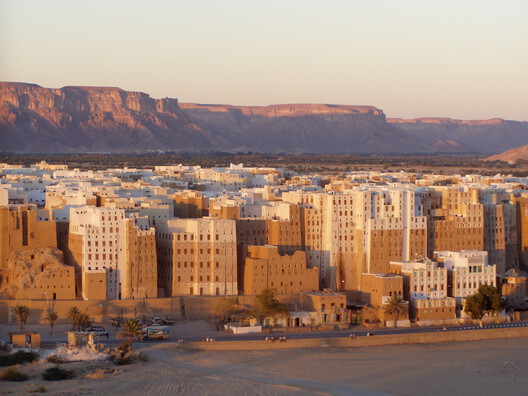
Symbols of technological development and urban density, tall buildings as we know them today emerged in the late nineteenth century, particularly in the United States, as a response to the rapid expansion of urban commerce and the need to grow cities without occupying additional land. The term skyscraper, for instance, was coined in the 1880s and originally referred to buildings with around 10 to 20 stories—an impressive height for the time.
However, the idea of building vertically is much older than the steel-and-glass skyscrapers of modern cities might suggest. Long before the Industrial Revolution, some societies were already experimenting with forms of vertical urbanization as a response to limited space, territorial defense, or environmental adaptation.
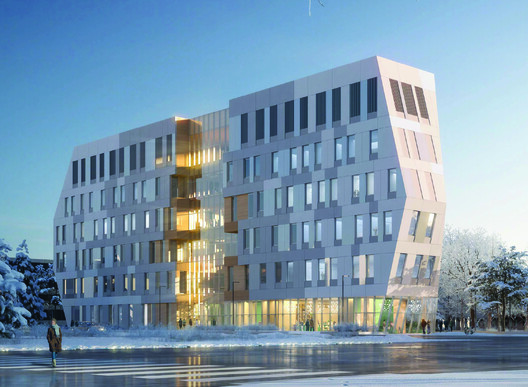
BIPV cladding with closed-edge aluminum honeycomb backing developed for The Myron and Berna Garron Health Sciences Complex (SAMIH), at the University of Toronto Scarborough, demonstrating how lightweight allows fast and hassle-free installation. Image Courtesy of Mitrex
The Myron and Berna Garron Health Sciences Complex (SAMIH), at the University of Toronto Scarborough, was shaped by a clear and non-negotiable mandate: at least 20% of the building's energy consumption had to be generated from renewable sources installed on-site. To meet this ambitious requirement, the university partnered early with Mitrex, a manufacturer specializing in building-integrated photovoltaics (BIPV), to explore how solar technology could move beyond the roof and become embedded within the architecture itself—positioning the project within a broader shift toward performance-driven sustainable architecture. The 63,000-square-foot facility houses teaching, research, and clinical training programs dedicated to educating future healthcare professionals. Designed by MVRDV in collaboration with Diamond Schmitt Architects, the project initially followed a conventional path, pairing a restrained facade with rooftop photovoltaic panels.
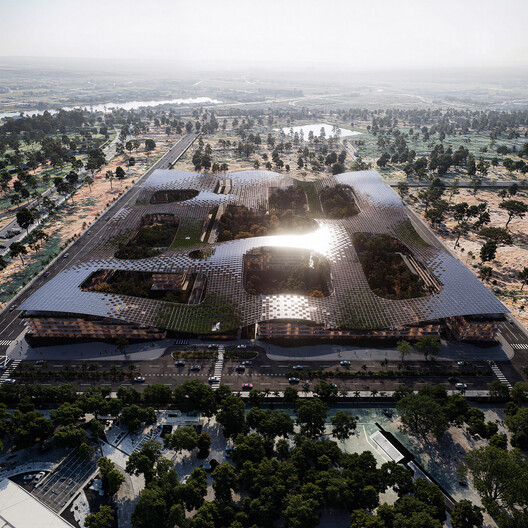
World Trade Center Biotic, Brasília. Image Courtesy of Architects Office
Located within the Parque Tecnológico de Brasília, the World Trade Center Biotic is a mixed-use development designed by Brazilian studio Architects Office as part of the district's broader urban expansion. The project is part of the master plan developed in 2020 by Carlo Ratti Associati and is currently being developed. Conceived as a multi-program complex, the proposal brings together offices, residential units, a hotel, retail spaces, and shared facilities within a single urban framework. The project occupies a site of approximately 70,000 square meters and is planned to reach about 180,000 square meters of built area, with an estimated 150,000 square meters expected to be completed by 2030.
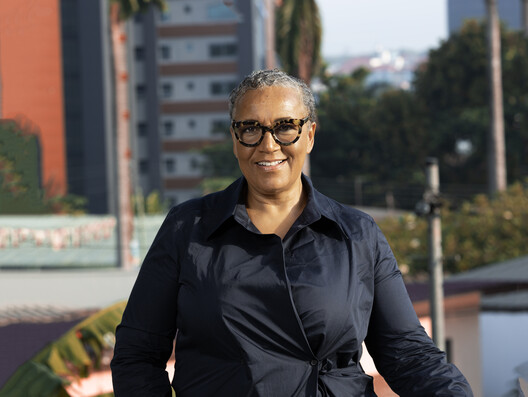
Lesley Lokko OBE has been recognized with the African Cultural Icon Award, honoring "leaders in the creative arts who promote African culture and heritage on a global stage." The accolade is one of nine awards presented annually to publicly nominated and industry-recommended figures by a panel of judges from across Africa. Nominees are evaluated based on "impact, innovation, sustainability, and contribution to Africa's growth." Lokko is the Founder and Chair of the African Futures Institute (AFI), headquartered in Accra, Ghana, and Director of the Nomadic African Studio, an annual month-long itinerant teaching program working across the African continent. She has been acknowledged for her transformative contributions to architecture, education, and cultural discourse within and beyond Africa, consistently challenging conventional narratives around African identity, space, and creativity.
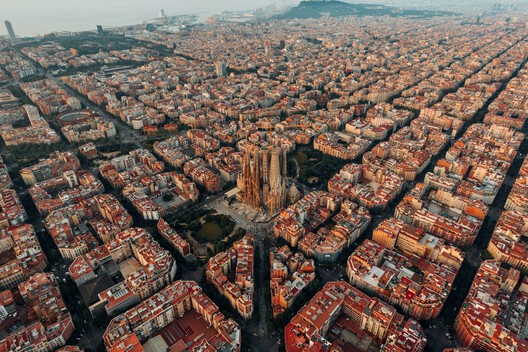
Barcelona is a city where architecture has long served as a laboratory of urban experimentation, each era leaving its mark on the city's fabric. From the dense streets of the Gothic Quarter to the ornate interiors of the Palau de la Música Catalana, the city expanded outward through Ildefons Cerdà's Eixample, a stage where Gaudí and his contemporaries challenged the rules of form, scale, and ornamentation. These experiments defined a local identity and culminated in the Sagrada Família, a vision that continues into the 21st century through the integration of advanced technology.
The city's twentieth-century transformation forged an architectural language with global influence. The principles of International Modernism are embodied in Mies van der Rohe's Barcelona Pavilion, while later developments—from Bofill's explorations in collective housing to the urban interventions of the 1992 Olympics—reshaped the skyline and the city's relationship to its waterfront. Subsequent contemporary projects continue to negotiate form, landscape, and urban scale, contributing to a layered and evolving city.