

Number 27
This Committee Statement was developed by the American College of Obstetricians & Gynecologists' Quality and Safety Initiatives Delegation in collaboration with Andreea Creanga, MD, PhD, Christina Davidson, MD, Ronald Iverson, MD, MPH, Sarah Kilpatrick, MD, PhD, Elliott Main, MD, and Catherine J. Vladutiu, PhD, MPH.
ABSTRACT: Rates of severe maternal morbidity (SMM) have risen over the past two decades, yet accurately identifying and measuring maternal health complications has become increasingly complex. These challenges stem in part from the lack of a standardized definition or consistent measurement approach for SMM, resulting in variability in reported rates and tracking methods. Quality-improvement methodologies such as multidisciplinary case review, data collection and monitoring by race and ethnicity, and implementing a culture of safety are critical to responding effectively when SMM occurs. In instances when SMM occurs, it is essential to implement strategies that support patients, families, and health care staff during and after the event to help reduce trauma and promote recovery.
Summary of Recommendations and Conclusions
Standardized measurements of severe maternal morbidity should be tracked in clinical settings to ensure systematic monitoring, patient safety, and identification of quality-improvement opportunities.
Cases of severe maternal morbidity should be reviewed by multidisciplinary teams to identify system, health care professional, and patient factors that could be improved.
Clinical case review committees and processes should be integrated into a hospital’s or facility's overarching quality and safety infrastructure so that opportunities identified through severe maternal morbidity case reviews can be directed to the most appropriate oversight body for development of corrective measures.
In instances of severe maternal morbidity, patients, families, and health care team members should receive support and active interventions throughout an adverse event, during hospitalization, and after discharge to minimize the harm of traumatic events and to optimize recovery and healing.
Background
There is significant interest in measures of major maternal morbidities, which can carry significant short-term and long-term consequences to the health and well-being of pregnant and postpartum people, as an indicator of care quality. Rates of severe maternal morbidity (SMM) have increased over the past 20 years, and there are persistent racial and ethnic disparities, with non-Hispanic Black and American Indian/Alaska Native populations experiencing approximately double the rate of SMM as White patients 1 2. Identifying and measuring maternal morbidities pose multiple challenges.
Unlike mortality, morbidity has no fixed endpoint. Morbidity naturally represents a spectrum of severity, making it arbitrary to decide where to set thresholds for inclusion in measurement, datasets, and point of intervention for quality improvement (QI) 3. Measuring rates of SMM may serve multiple purposes. Population health measurement of SMM, a potential precursor to maternal mortality, may have implications for monitoring and addressing drivers of maternal mortality before mortality events. When measured for population health, SMM may assess gaps in and utility of community-based or social and structural determinant interventions to address maternal care needs 4. Measures of SMM also are useful for driving improvements in maternal health in hospitals and state- or regionally based QI teams or perinatal quality collaboratives (PQCs) 5 6 7 8. Both hospitals and PQCs have shown improvements in rates of maternal morbidity measures through targeted QI interventions guided by best practices using tools such as patient safety bundles 9. Individual hospitals also have used structured multidisciplinary review of severe morbidity to reduce rates of maternal complications, which is possible only with correct identification of SMM events 10.
Recommendations
Definition and Measurement of Severe Maternal Morbidity
Severe maternal morbidity is widely monitored in the United States, yet the ways in which it is measured vary, with some measures intended for population-level surveillance and others for facility-based monitoring. Existing measures have different definitions with no consensus on the specifications, and each is used for different purposes, such as for population health monitoring or for tracking and improving clinical quality of care at the facility level. Standardized measurement of severe maternal morbidity should be tracked in clinical settings to ensure systematic monitoring of data, patient safety, and identification of quality-improvement opportunities . The four main approaches developed for different purposes of measuring rates of SMM are described briefly here, and a detailed comparison of each measure is provided in Table 1 .

The Centers for Disease Control and Prevention’s (CDC) SMM measure was developed in 2012 to monitor population health 11. It is comprised of 21 indicators using International Classification of Diseases diagnosis and procedure codes chosen based on their relationship to maternal mortality 12. This measure has been used widely in population research studies, many of which have noted that the indicator for blood transfusion accounts for more than half of the SMM rate and alone is associated with relatively low severity 13 14 15. This has led many to calculate rates of SMM both with and without blood transfusions, which may be a limitation of this measurement strategy 16. Another limitation is the poor specificity of codes for renal injury and disseminated intravascular coagulation (DIC) 17 18. For example, any peripartum platelet count less than 150,000/microliter (even asymptomatic) could be coded using the International Classification of Diseases, Tenth Revision code O72.3 for postpartum coagulation defects and qualify for the SMM DIC indicator. There is general agreement that this measure should not be used for hospital-level comparisons.
The Agency for Healthcare Research and Quality’s (AHRQ) Maternal Health Indicators include modifications to the CDC's SMM measure described previously for use in annual reports by states and other geographic areas 17. These modifications include changes to the codes in the renal and DIC indicator categories, and blood transfusion is entirely removed 17. The AHRQ is also developing SMM measures that include antepartum and postpartum time periods, and several additional proposed measures address mental health and substance use complications during emergency department visits or hospital admissions in the postpartum period 19. None of these measures are currently proposed for use at the facility level.
The Joint Commission and the Centers for Medicare & Medicaid Services (CMS) recently developed Severe Obstetric Complications (PC-07 or SOC), a measure designed for use at the hospital level 20. The measure is based on the CDC's 21 indicators but incorporates a series of case-mix adjustments. It first excludes all diagnoses that were present on admission and then applies risk adjustment based on conditions, comorbidities, and vital signs recorded at admission. The measure is reported both with and without blood transfusions. Beginning in 2024, the CMS requires all birthing facilities to report this measure, which is collected electronically 21. Given the complexity of this e-measure, hospitals will require multiple reporting cycles to report accurately. Obstetric measures intended for external reporting first should undergo review and approval by labor and delivery department hospital leadership, and any data obtained using its specifications should be appropriately contextualized and viewed as informative rather than directive. As experience with this electronic clinical quality measurement grows, further refinements are anticipated to the specifications for the e-measure and to the underlying SMM indicators.
In 2016, the American College of Obstetricians & Gynecologists (ACOG) and the Society for Maternal-Fetal Medicine (SMFM) adopted a different set of specifications for case review of SMM 22. Specifically, this approach identifies criteria for obstetric sentinel events , defined as transfusion of 4 or more units of blood or admission to a critical care unit or both. These criteria serve as a minimum threshold for identifying cases that warrant system-level review aimed at informing QI initiatives. This approach to measurement is not intended to function as a hospital performance measure, and the guidance document associated with these specifications also encourages consideration of additional conditions that may qualify as SMM.
Several other organizations have proposed additions to the list of SMM measures, including the Society of Obstetricians and Gynecologists of Canada, the New York State Department of Health, and the University of Pennsylvania 23 24 25. Notably, the recommendations from the University of Pennsylvania were informed primarily by a patient focus group 25. Although many of these proposed additions are of interest, none have been validated using a large U.S. dataset. It is likely that some of the additions proposed by these organizations will be incorporated into existing metrics over time.
Definition and Measurement Strengths, Limitations, and Future Directions
Despite differences in the SMM measures, there is a shared understanding that SMM encompasses outcomes of labor and delivery that result in significant short-term or long-term effects on health. Although widely used, current SMM measures have limitations. Most measurement strategies focus exclusively on the birth hospitalization, missing complications that occur in the antepartum and postpartum periods, including those related to mental health; substance use; or trauma, such as gun violence and intimate partner violence 26 27. The exclusion of these clinical conditions is particularly concerning given that all of these conditions and events are known leading causes of death during pregnancy and postpartum 28. Current measures depend on administrative data and coding practices, which can vary in accuracy, especially in the outpatient setting. Overall, it is important to exercise caution when using current SMM rates as indicators of care quality 22.
Moving forward, refining SMM definitions to address gaps, by capturing data across the perinatal period and incorporating a broader range of conditions, is needed to develop critically important and meaningful indicators. The challenges and new approaches for collecting a wider range of SMM metrics outside the delivery episode are explored in a recent AHRQ report 19. Continued recognition that some measures may be specific to hospital-based care whereas others may reflect a broader continuum of maternal health services that extends beyond the hospital setting is also required. Despite existing measurement limitations, SMM in clinical settings should be tracked for ongoing local monitoring and to identify priority areas for QI.
Quality-Improvement Interventions to Address Maternal Morbidity
Review of Care
Cases of severe maternal morbidity should be reviewed by multidisciplinary teams to identify system, health care professional, and patient factors that could be improved . A core component of every QI and patient-safety program is a holistic, in-depth review of specific clinical events, similar to reviews conducted by statewide maternal mortality review committees. The goal of case review is to identify health care professional, facility, patient, and social and structural determinants of health factors that may have contributed to the adverse event or outcome so that QI opportunities can be identified and implemented 29.
At a minimum, facilities should identify SMM triggers for review, after which a multidisciplinary committee should review all selected cases at regular intervals. Each facility would have a process for chart abstraction and review that targets identification of factors that may have contributed to the morbidity and how these factors may be addressed.
Identify the Severe Maternal Morbidity Triggers for Review
Once criteria for review have been selected by a committee, a process to ensure timely identification of cases meeting these trigger criteria may be developed. Examples of minimal selected clinical criteria that may be used for SMM review, further adapting criteria as defined by ACOG, the SMFM, and the CDC, can be viewed in Box 1 22. Depending on individual facility or health system criteria, the need for review may be identified from hospital shift reports, electronic incident reporting systems, administrative coding, electronic health record (EHR) queries, or a combination of these.
Box 1.
Clinical Criteria for Severe Maternal Morbidity Chart Review
Case Review Trigger Examples
Transfusion of 4 or more units of packed red blood cells (antepartum, intrapartum, postpartum)
Unplanned admission to intensive care unit
Unexpected return to the operating room or unexpected operating room procedure
Unplanned hysterectomy
Postpartum stay greater than 7 d
Uterine rupture
Maternal cardiorespiratory arrest
Sepsis (antepartum, intrapartum, postpartum)
Reported from staff through hospital system
Have a Multidisciplinary Committee that Reviews Severe Maternal Morbidity Events at Regular Intervals
Multidisciplinary committee composition for SMM review will vary based on hospital structure and resources. The focus of the review should be on objective information gleaned from the EHR, in addition to discussion with the primary team members involved in care. Clinical action taken in the case should be compared with hospital-specific policies and published guidelines. Evaluation by a physician or advanced practice professional reviewer and a nurse reviewer offers diverse clinical perspectives and may enhance the rigor and comprehensiveness of the assessment. One approach to care review may be to establish committee subgroups, each co-led by a physician and a nurse, with trigger criteria organized so that each subgroup consistently reviews the same set of triggers. This may facilitate more rapid recognition of practice patterns and system opportunities that may be contributing to morbidity events.
Develop a Process for Case Abstraction and Review
Review should be conducted in a standardized manner that compares clinical performance with generally accepted standards and facility-based guidelines and informs process-improvement plans. An electronic case review process that is integrated with the EHR can facilitate both case abstraction and case review summary. An SMM review should conclude with physician, midwifery, and nursing recommendations. Some cases may exhibit appropriate medical management, which should be reinforced, but a system or process may be identified that could improve future patient care and outcomes. It is important to assign a final disposition based on review of care, with options tailored to the birthing facility's internal quality structure. Examples of case dispositions are provided in Box 2 .
Box 2.
Next Steps When Improvement Opportunities Are Identified (More Than One May Be Selected)
System and process improvement (specify what system or process or both needs improvement)
Guideline and policy development and review (specify what guideline or policy needs to be developed or reviewed)
Feedback to staff regarding priority systems and process improvements
Informational feedback given by leadership
Identification of issues that need tracking and trending
Refer to peer review for health care professional management concerns
Refer to nursing leadership for nursing management concerns
Meets standard of care
Develop a Process to Improve Health Outcomes and Disparities Based on Severe Maternal Morbidity Case Reviews
It is crucial to identify where interventions are needed to affect improvement after cases of SMM. Although health care professional–specific factors frequently are identified in individual cases, focusing on modifiable system-level factors may offer greater potential to improve outcomes sustained across a broader patient population.
For example, a system factor may be delayed or poor communication between two hospital units. This then may have resulted in a delay in treatment in a timely fashion for a patient with severe postpartum hypertension. Creating a better communication pathway between those two units may eliminate or improve the problem for any patient cared for by these units. A systemic approach, rather than an approach that addresses a singular clinician's actions, may have a further-reaching effect on reducing future morbidity. Tracking systems issues identified through the SMM-review process and deciding which issue to address are important steps toward reducing facility-level SMM. Clinical case review committees and processes should be integrated into a hospital’s or facility ' s overarching quality and safety infrastructure so that opportunities identified through severe maternal morbidity case reviews can be directed to the most appropriate oversight body for development of corrective measures .
Addressing Severe Maternal Morbidity Through Quality-Improvement Methodologies
Establishing a safety-oriented culture, ensuring systematic and sustained data collection, and implementing processes that prioritize long-term sustainment are critical elements of QI that help create an environment prepared to respond effectively to SMM 30. Once a committee has identified which factors may need to be addressed, there are a number of improvement models available, including the Institute for Healthcare Improvement’s Model for Improvement, Lean, and Six Sigma 31. These models include the practices of defining and understanding the problem; including all relevant participants; recognizing, developing, and prioritizing solutions; then implementing proposed changes. At the core of these activities is use of data systems and qualitative feedback from the team before and throughout a QI project 32.
An improvement team should consider how to test and then adapt, adjust, or abandon solutions in an iterative fashion that is safe and appropriate to the care teams and patients. Expanding the scale or number of events in each test of change, as well as the scope or environment and patients involved, can lead to the adoption of standard practices across a system, especially when done thoughtfully and with careful evaluation from the improvement team 33. Continued measurement of best practices and outcomes within an updated system will assist with sustainment of desired outcomes 34. Measurement that includes data disaggregated by race, ethnicity, and social and structural determinants of health will assess inequities in care and disparities in outcomes and can be used to guide and sustain improvement efforts.
Continued engagement of patients and team members in system-improvement efforts can facilitate change and reduce barriers 35 36. Soliciting feedback early, letting everyone involved know about the proposed solutions, and continuously updating the team on their progress facilitates the adoption of best practices. Displaying information related to QI or “quality boards” on patient care units, creating accessible data-reporting systems online, and other communication methods are ways to elicit feedback from care teams and patients 34. As standardized processes are developed and implemented, simulation may be a useful method to ensure that the system has the resources to meet goals, reinforce expected actions, and identify any structural barriers to desired change 37.
Engagement With Local, State, or National Quality Collaboratives
Hospital and health system engagement with PQCs and other state, regional, and national quality collaboratives can help improve perinatal outcomes such as SMM, as well as disparities in outcomes 5 6. PQCs and other quality collaboratives provide education, support for QI and data analysis, and opportunities for networking and problem solving among clinical teams to enhance care quality 38. Standardizing QI data measurement, including SMM, across hospitals and health systems participating in a PQC or other collaborative can allow for benchmarking against similar hospitals and provides population-level insights to guide large-scale interventions.
Support for Patients After Morbidity Events
In instances of severe maternal morbidity, patients, families, and health care team members should receive support and active interventions throughout an adverse event, during hospitalization, and after discharge to minimize the harm of traumatic events and to optimize recovery and healing . A coordinated, complete event follow-up may help meet the goals of mitigating ongoing emotional and physical trauma while also offering support for individual emotional responses.
Continuous communication with a patient and support network or partner throughout an event demonstrates respect and helps to ensure that the adverse event and its management are understood correctly. In-time explanations of actions during SMM events and frequent updates in a designated, private space should be a standard of care for discussions. This process may be facilitated by having a designated person from the delivery team in a structured care review with a patient, their partner, or desired contact with the family on a prescribed schedule in an ongoing event 39 40.
During a postevent hospitalization, patients and their support networks should be engaged in discussions in which both the care that was provided and the condition are thoroughly explained. A more complete support network should include the patient's obstetric care professional, nurse, a social–psychological support professional, and consulting services such as anesthesia, critical care, or neonatology 41 42. This meeting should be held in a comfortable and private space, with appropriate chairs and lighting, toward the end of an admission. Patients may not be able to process information or have generated questions if a review is conducted too soon after an event. A written summary of the hospital course should reflect these conversations and be provided to the patient at discharge.
When meeting with a patient, the team should acknowledge the event and its effects on the patient's physical and emotional health 43 44. It is essential to explore how the patient feels, explain the medical condition and the specific event, answer questions, and describe how the team will work to address ongoing physical and emotional effects. It is best to avoid phrases or statements that minimize or temper the event and its effects. The team should address the situation or event holistically and respect the emotional and physical ramifications that are unique to the patient before them.
A complete and structured discharge plan for any patient includes a series of actions or recommendations. The summary of the hospital course for a patient who experienced SMM should be sent to the patient's obstetric care professional, primary care physician (PCP), and any specialists involved or to whom the patient is being referred. Follow-up with a patient who experienced morbidity ideally should occur at a short interval, such as in 1–2 weeks, with their prenatal care professional 45. Scheduled psychological support with therapists or other trained individuals, emotional support identification and connection, and follow-up with appropriate medical consultative services should be arranged. Consider support groups, social work assistance with resource acquisition, as well as lactation consultation and support when desired. Some patients may require physical or occupational therapy after prolonged immobilization or intubation. Contraception in the setting of medical conditions should be addressed empathetically to support the patient's individual reproductive life plan. Patients may benefit from early PCP involvement in ongoing care, and a PCP may provide serial mental health assessments after discharge, such as screening and referral for depression, posttraumatic stress disorder, and anxiety.
Supporting Health Care Team Members
Physicians of all specialties, nurses, and other clinicians involved in obstetric care may witness repeated SMM or even mortality events and nearly always experience psychological trauma. Traumatic birth events can affect those providing care and may lead to decreased self-confidence, guilt, shame, and psychological distress 46 47 48 49. Because individuals perceive traumatic events differently based on various intrinsic and extrinsic factors, it is crucial to normalize and raise awareness of strategies designed to lessen the emotional effect of these events while building health care team member resilience.
Clinical debrief, a familiar practice for many health care teams, involves immediate assessment of what went well and what needed improvement, with a primary focus on team performance and patient safety. Clinical debrief may inform and augment a formal case review conducted outside the clinical setting 50. It is important to distinguish between a clinical debrief and a holistic team debriefing, which instead aims to provide a space for health care teams to process emotionally challenging events, offer mutual support, and enhance their confidence and emotional health without assigning blame. Team debriefing in this context is a structured, nonpunitive process in which health care teams reflect on a traumatic or high-stress incident, such as a patient death or medical error 51.
Studies have highlighted that, although those providing care desire support after a serious event, health care organizations often fall short in providing adequate emotional support for their staff 52 53. Debriefing held with a primary focus on team processing often is inconsistent or absent in health care settings due to several key barriers, including a lack of training on how to conduct effective debriefs, limited time, and an absence of psychological safety that makes team members hesitant to speak openly. Without a structured approach, staff are left unsupported and valuable opportunities for learning and leadership, as well as mutual support, may be missed, highlighting the need for a standardized process to ensure care team well-being.
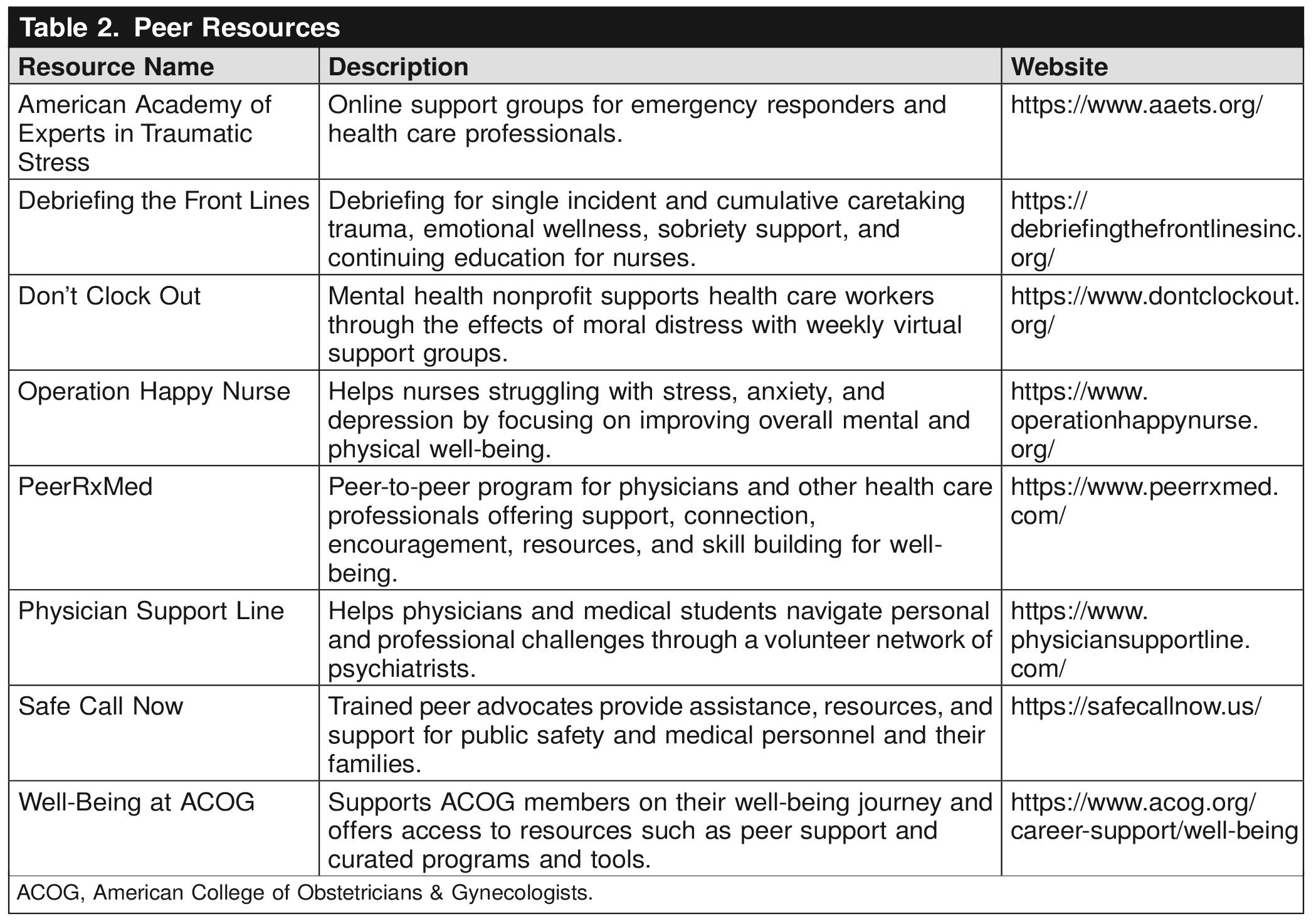
Debriefs should be led by a trusted, trained facilitator on the unit in a private space as soon as possible after the event and involve the entire multidisciplinary team, though participation should remain voluntary 52. A debrief acknowledges the event, promotes emotional processing, and may identify opportunities for improvement without extensive systems discussions. Structured tools can be particularly effective in guiding these discussions, addressing both performance feedback and the emotional well-being of the team 54. Resources that may augment health care team and clinician support and well-being are shown in Table 2 .
Conclusion
Severe maternal morbidity remains an ongoing concern in obstetric care. Measurement of SMM ideally is monitored in both clinical care and population health settings to ensure high-quality care, patient safety, and opportunities for improvement. Integrating multidisciplinary SMM clinical case review into facility quality and safety processes allows care settings to identify and prioritize specific elements and actions that may be undertaken to improve care. In instances in which SMM does occur, the events related may take a heavy toll on all involved, including patients, their families and support networks, and each clinician and member of the health care team. Every effort to support all parties should be prioritized after SMM events and ideally should include follow-up support for any ongoing trauma-related needs. Although robust processes to measure, monitor, and analyze SMM events are essential to support high-quality delivery of obstetric care, ultimately the objective must be to prevent SMM events in the first place, using system learning and strategies to optimize care.
Use of Language
ACOG recognizes and supports the gender diversity of all patients who seek obstetric and gynecologic care. In original portions of this document, authors seek to use gender-inclusive language or gender-neutral language. When describing research findings, this document uses gender terminology reported by investigators. To review ACOG's policy on inclusive language, see https://www.acog.org/clinical-information/policy-and-position-statements/statements-of-policy/2022/inclusive-language .
Conflict of Interest Statement
All ACOG committee members and authors have submitted a conflict of interest disclosure statement related to this published product. Any potential conflicts have been considered and managed in accordance with ACOG's Conflict of Interest Disclosure Policy. The ACOG policies can be found on acog.org . For products jointly developed with other organizations, conflict of interest disclosures by representatives of the other organizations are addressed by those organizations. The American College of Obstetricians & Gynecologists has neither solicited nor accepted any commercial involvement in the development of the content of this published product.

