
LOADING . . . PLEASE WAIT

Tweakment Finder TWEAKMENT
FINDER
CLOSE

WHAT'S BOTHERING YOU

CHOOSE AN AREA OF THE FACE OR BODY TO CHECK OUT YOUR SKINCARE AND TWEAKMENT OPTIONS

Biostimulators

Written by: Becki Murray

Updated by: Becki Murray

Last Updated: 7 January 2025

What are biostimulators?

Biostimulators are substances injected into the skin to stimulate your body’s natural production of collagen and elastin. By stimulating these key structural proteins, which give your skin strength, flexibility and smoothness, biostimulators can be used to improve skin texture and quality, to enhance facial volume, and to create an overall more youthful appearance over time.

When most people in aesthetic clinics talk about biostimulators they mean poly-l-lactic acid (Sculptra), calcium hydroxyapatite (e.g. Radiesse, HArmonyCa) or at a push, polycaprolactone (Ellanse) – which we will explain in more detail below.

However, it’s important to note that the line between what is and what isn’t a biostimulator has become a little blurred recently, given the popularity of everything regenerative, or more specifically treatments that stimulate collagen and elastin in the skin. Treatments such as exosomes, injectable moisturisers and polynucleotides can be said to have a biostimulatory effect, but as we’ll also outline below, they do work a little differently, so we’ve popped them into separate tweakment pages.

Here’s what you need to know about biostimulators…

CATEGORY

Injectables

TWEAKMENT TIME

10-60 minutes

LONGEVITY

3 months - 1 year

ANAESTHESIA

On request

DOWNTIME
1-3 days

Enter your postcode

How do biostimulators work?

Biostimulators work by being injected into specific areas where they stimulate the body’s natural collagen production. Over time, the body responds to the injected substances by producing new collagen, which helps to restore volume, improve skin texture, and reduce wrinkles, resulting in a more youthful appearance.

What results can you see with biostimulators?

Results from biostimulators include improved skin texture and elasticity, increased volume and fullness in treated areas, and a reduction in the appearance of fine lines and wrinkles.

Moisturising injection 100

injectables

How quickly can you see results?

You do have to be a little patient when it comes to biostimulators because, as the name suggests, they work by stimulating collagen production – a process that takes time. This means that while there may be some initial volume increases, the full effects develop gradually.

The results start to appear after a few weeks as collagen production begins, with full results developing over several months. The timing can vary depending on the specific product used and the individual’s response to the treatment.

How long do biostimulator treatments last?

The results of biostimulators can last from several months to a few years, depending on the specific product used and individual factors such as the patient’s age, skin type, and lifestyle. Follow-up treatments are often recommended to maintain optimal results, so speak to your practitioner about this.


What are biostimulators made from?

Biostimulators are made from a variety of substances, including synthetic and natural materials such as poly-L-lactic acid (PLLA), calcium hydroxyapatite (CaHA), polycaprolactone (PCL), and hyaluronic acid hybrids. These materials encourage the body to produce collagen and elastin, which are essential for maintaining skin elasticity and firmness.

You can find out a little more about each type of biostimulator below:

Poly-L-lactic acid (PLLA)

PLLA is a synthetic, biodegradable polymer that, when injected, can gradually stimulate collagen production over several months, leading to a fuller, more youthful appearance.

The brands to know: Sculptra.

Sculptra is a Poly-L-lactic acid-based injectable dermal filler, designed to provide a gradual and natural-looking improvement in skin texture and facial volume

The brands to know: JULÄINE™

JULÄINE™ is getting very favourable reviews from practitioners who are using it for nasolabial folds (aka smile lines) and marionette lines. That’s because its PLLA microspheres have a highly uniform particle size and degrade slowly, which makes them very helpful for restoring volume in depressed skin.

Calcium hydroxyapatite (CaHA)

Calcium hydroxyapatite (CaHA) is a naturally occurring mineral found in human bones and teeth. In aesthetics, it is used as a dermal filler in the form of tiny, smooth particles suspended in a gel. CaHA provides immediate volume and stimulates collagen production for longer-lasting results.

The brands to know: Radiesse.

Radiesse is a dermal filler that contains calcium hydroxyapatite (CaHA) microspheres. It is used to correct moderate to severe facial wrinkles and folds and for hand rejuvenation. Radiesse provides immediate volume and lifts while also stimulating the body’s natural collagen production for extended results.

The brands to know: HArmonyCa.

HArmonyCa is an innovative hybrid injectable that combines calcium hydroxyapatite (CaHA) with hyaluronic acid (HA). This dual-action treatment provides the immediate volumising and hydrating effects of HA while stimulating collagen production through CaHA for longer-lasting improvements in skin quality.

Polycaprolactone (PCL)

Polycaprolactone (PCL) is a biodegradable polymer. As a biostimulator, PCL-based fillers stimulate collagen production and provide long-lasting volume and skin rejuvenation.

The brand to know: Ellanse.

Ellanse is a brand of dermal fillers made from polycaprolactone (PCL) microspheres. It offers immediate volume correction and stimulates the production of collagen, with results that can last from one to four years depending on the specific product used.

RELATED CONCERNS


Barcode Lip Lines

The ‘barcode’ lines are the little vertical lines above the upper lip that run vertically downward into the lip. These lip lines are...

Read More
Crepey Skin

Crepe paper might traditionally make you think of birthdays and presents, but when the material’s crinkled texture also reminds you of...

Read More
Dry Rough Skin

Many people suffer with dry skin on their face and/or body. There are a number of factors that cause dry skin and its severity will vary...

Read More
Wrinkles

People spend billions of pounds every year trying to get rid of lines and wrinkles because they are one of the things we most associate...

Read More

Brands


NEW ELLANSE LOGO RRadiessePlus Logo RGB 24 23 22Sculptra logo

What is it like having biostimulators for your face?

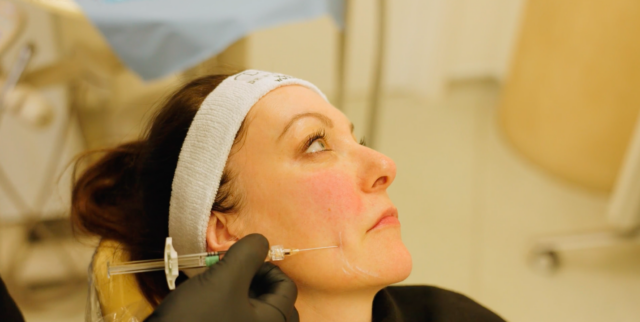
Having biostimulators injected into your face involves a series of small injections, typically performed under local anaesthesia or with a numbing cream to minimise discomfort. The procedure is relatively quick, and most people experience only mild swelling or bruising afterward.

Can you have biostimulator treatments for your body?

Yes, biostimulator treatments can be used for the body to improve skin texture, elasticity, and volume in areas such as the hands, neck, décolletage, and bum.

How much do biostimulator treatments cost?

The cost of biostimulator treatments varies depending on the specific product used, the area being treated, and the practitioner’s expertise. On average, you can expect treatments to cost around TKK.

What are the benefits of biostimulators?

The benefits of biostimulators include long-lasting results, improved skin texture and elasticity, natural-looking enhancements, and the gradual improvement of facial contours. They stimulate the body’s own collagen production, leading to sustained improvements over time.

Can biostimulators be used alongside other treatments?

Yes – not only can biostimulators be used alongside other aesthetic treatments such as hyaluronic acid fillers, toxin injections, and laser treatments, but they can also enhance your overall results from such procedures!

That’s because biostimulators can boost your body’s natural healing processes, reducing inflammation and other side effects, for faster healing. This can also prolong your results so you get more bang for your buck.

Does having biostimulators hurt?

The procedure can cause some discomfort, but it is generally well-tolerated. Local anaesthesia or numbing cream is often used to minimise pain during the injections. After the procedure, there may be some temporary soreness, swelling, or bruising, but this should be shortlived.

What are the drawbacks of biostimulators?

When you have treatment with biostimulators, side effects can include temporary swelling, bruising, and discomfort at the injection site. There is also a risk of overcorrection or asymmetry, and in rare cases, allergic reactions or granulomas may occur. The results are not immediate and can take several months to fully develop too, which is less good news for impatient patients.

Can you have a facelift after biostimulators?

Many facial plastic surgeons are not keen on biostimulators because of the way the collagen they produce affects the tissues of the face, making them harder to separate and manipulate during surgery. It’s not so much the case that you can’t have a facelift after biostimulator treatment, as that the surgery will be a trickier process for your surgeon and they may not achieve the full results that they or you want. If you want to try a biostimulator but know you want to have a facelift one day, ask your chosen surgeon for their  views. They may tell you to wait at least two years after biostimulator treatment before thinking about surgery – or just to avoid the treatment altogether.

What is the difference between biostimulators, exosomes, injectable moisturisers, and polynucleotides?

If you feel like the industry is being flooded with injection-based skin boosters that can seem confusingly similar right now, you aren’t alone. But before you give in to the confusion, here’s a quick guide to the differences between them all:

Biostimulators

  • Definition: As mentioned on this page, biostimulators are injectable substances that stimulate the body’s collagen production for long-term improvements in skin volume and texture.
  • Ideal for: Long-term volume, reduction in fine lines and structural improvements
  • Mechanism: Act as scaffolds for collagen production and stimulate fibroblasts in the skin to produce new collagen.
  • USP: Long-lasting results (up to several years) that develop gradually over months as collagen is produced

Exosomes

  • Definition: Cell-derived vesicles that contain growth factors and signalling molecules, used to promote skin regeneration and healing. Can be human, animal or plant based.
  • Ideal for: Broad regenerative and healing benefits
  • Mechanism: Deliver signalling molecules to promote skin regeneration and healing by influencing cell behaviour.
  • Speed and longevity: Long-term regenerative benefits, though initial effects may be subtle.
  • You can read more about exosomes

Injectable moisturisers

  • Definition: Typically hyaluronic acid-based products that revitalise the surface of your skin for a lit-from-within glow
  • Ideal for: Immediate hydration and plumping effects
  • Mechanism: Hyaluronic acid attracts and retains water, providing deep hydration within the skin. There is also an immediate skin-plumping effect due to HA’s volumising properties.
  • Speed and Longevity: Immediate but temporary results, usually lasting a few months.
  • You can read more about injectable moisturisers

Polynucleotides:

  • Definition: DNA fragments from fish sperm that stimulate cell regeneration
  • Ideal for: Promoting deep skin repair to improve skin texture and elasticity
  • Mechanism: Provide building blocks for DNA repair and stimulate fibroblast activity to enhance cell turnover.
  • Speed and Longevity: Gradual results as the skin regenerates and repairs, but you can see longer-term improvement with regular treatments.
  • You can read more about polynucleotides

Are biostimulators the same as stem cells?

No, biostimulators are not the same as stem cells. Biostimulators are substances that stimulate collagen production, while stem cells are undifferentiated cells that can develop into different cell types and have regenerative properties. Both are used in aesthetics but work through different mechanisms.

Dr Ali Daghestani

Cosmetic Doctor

Doctor Ana The Skin Clinic, 3 Calthorpe Road, Edgbaston, Birmingham, B15 1QP

Dr Ali Daghestani qualified from Debrecen Medical and Dental School in 2014 where he discovered his passion for transforming patient’s oral health, smiles,...

Dr Barbara Kubicka

Cosmetic Doctor

Clinicbe, 32 Clabon Mews, London, SW1X 0EH

Dr Barbara Kubicka has practised Aesthetic Medicine for a number of years, working with top companies including Harrods, Allergan, Remington and Restylane. She...

Dr Victoria Dobbie

Cosmetic Dentist

DRVICTORIA™ Clinic, 32 -34 Alva Street, Edinburgh, EH2 4PY

Dr Victoria Dobbie brings over two decades of expertise in aesthetic medicine, with a distinguished career that began in private dentistry. She served for...

Natali Kelly

Cosmetic Nurse-Prescriber

Natali Kelly Clinic, 69 Walton St, London, SW3 2HT

Natali Kelly is a Registered Independent Nurse Prescriber, Lifestyle Consultant, and Reiki Healer with over 20 years of experience....

single-tweakments.php