|
Kylian Mbappé of France entered the World Cup semifinals with Argentina’s Lionel Messi in the race for the Golden Boot. Pundits, punters, and chatbots are divided on who finishes as the football tournament’s top scorer. The sharpest predictor of them all, though, is a goldfish.
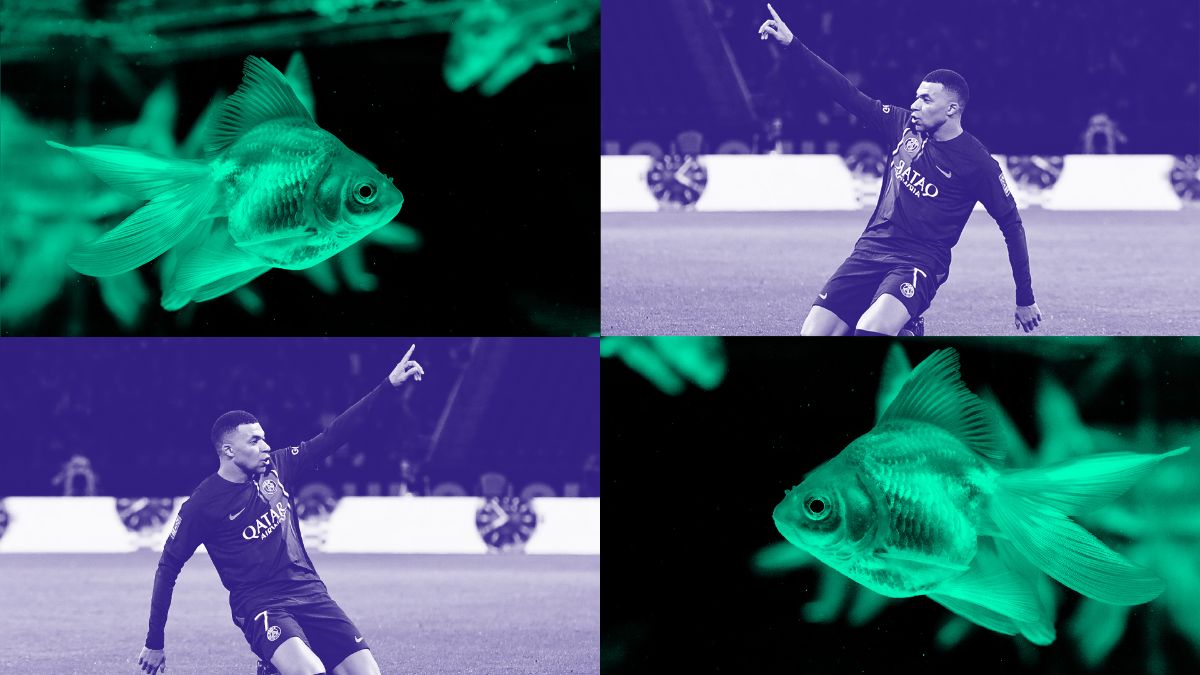
Swimbappé lives in a Toronto storefront tank fitted out as a miniature pitch, and calls matches by swimming toward one of two flags at either end. Midway through the group stage, his handlers had counted 14 correct calls against four misses, at about 80% accuracy. Draws were ruled no-contests, since there is no third flag.
This year, artificial intelligence is giving the goldfish competition. Before the June 11 opener, Dutch research bureau Onder set five programs — ChatGPT, Claude, Gemini, Copilot, and Perplexity — an identical task. Each had to weigh form, rankings, and injuries, and predict all 104 matches.
Onder sealed their answers, and has been marking each prediction right or wrong on a public scoreboard. The tracker ScoreGPT grades the five models every matchday morning, and across the tournament their individual-match accuracy has run between 50% and 60%. None has matched the goldfish.
The machines’ best call of the tournament came before a ball was kicked. Four AI tools surveyed in June named Spain, France, England, and Argentina as the semifinalists, and all four made it. The models also picked Spain to beat France in the final — a scenario now dead, since the two met in the semifinals instead.
Match by match, though, AI has stumbled. The same four tools called Brazil the biggest disappointment and Norway the dark horse, yet none saw Norway sending Brazil home in the round of 16. Germany’s exit to Paraguay was a miss for all five models on ScoreGPT’s panel, which had backed a comfortable German win.
When USA Today asked Copilot to call four group matches in one day, all four ended in draws — an outcome it had considered in none of them. Swimbappé, at least, had an excuse.
The fish also has tradition on his side. The craze for animal predictions at football’s biggest tournament traces to Paul the Octopus, who called eight of eight in 2010, the final included, and inspired successors from Shaheen, an Emirati camel, to Achilles, a deaf cat in Saint Petersburg.
Shawk, a hawk in Dubai, has forecast more than a dozen matches this year, and got most right, including France over Morocco in the quarterfinals.
Thai zoos have put tigers and hippos on forecasting duty. The most famous, celebrity pygmy hippo Moo Deng, chose between flag-marked watermelons on July 14 to call both semifinals — France over Spain and England over Argentina. In Mexico City, a duck named Merlin, more talisman than forecaster, waddled through the hosts’ opening-day celebrations and met President Claudia Sheinbaum at the National Palace on June 22.
So who calls the final, animal or algorithm? Moo Deng’s verdict has been on the record since July 14. Swimbappé swims to his pick before Sunday’s kickoff.
This newsletter backs the fish. You?
|

 Indranil Ghosh
