Meat Cooking Temperature Chart
How I Finally Stopped Overcooking (and Undercooking) Everything – Meat Cooking Temperature Chart
For a long time, cooking meat stressed me out more than it should have. I’d either pull it off the heat too early and second-guess myself, or leave it on too long “just to be safe” and end up with dry, disappointing results.
I didn’t grow up memorizing meat temperatures, and guessing by color or feel only got me so far.
Eventually, after one too many “is this done?” moments at the stove, I decided to stop winging it.
I started paying attention to internal temperatures instead of vibes. That’s when things clicked.
Cooking meat became more consistent, safer, and honestly, way more enjoyable and I am here to make it easy for you as well.
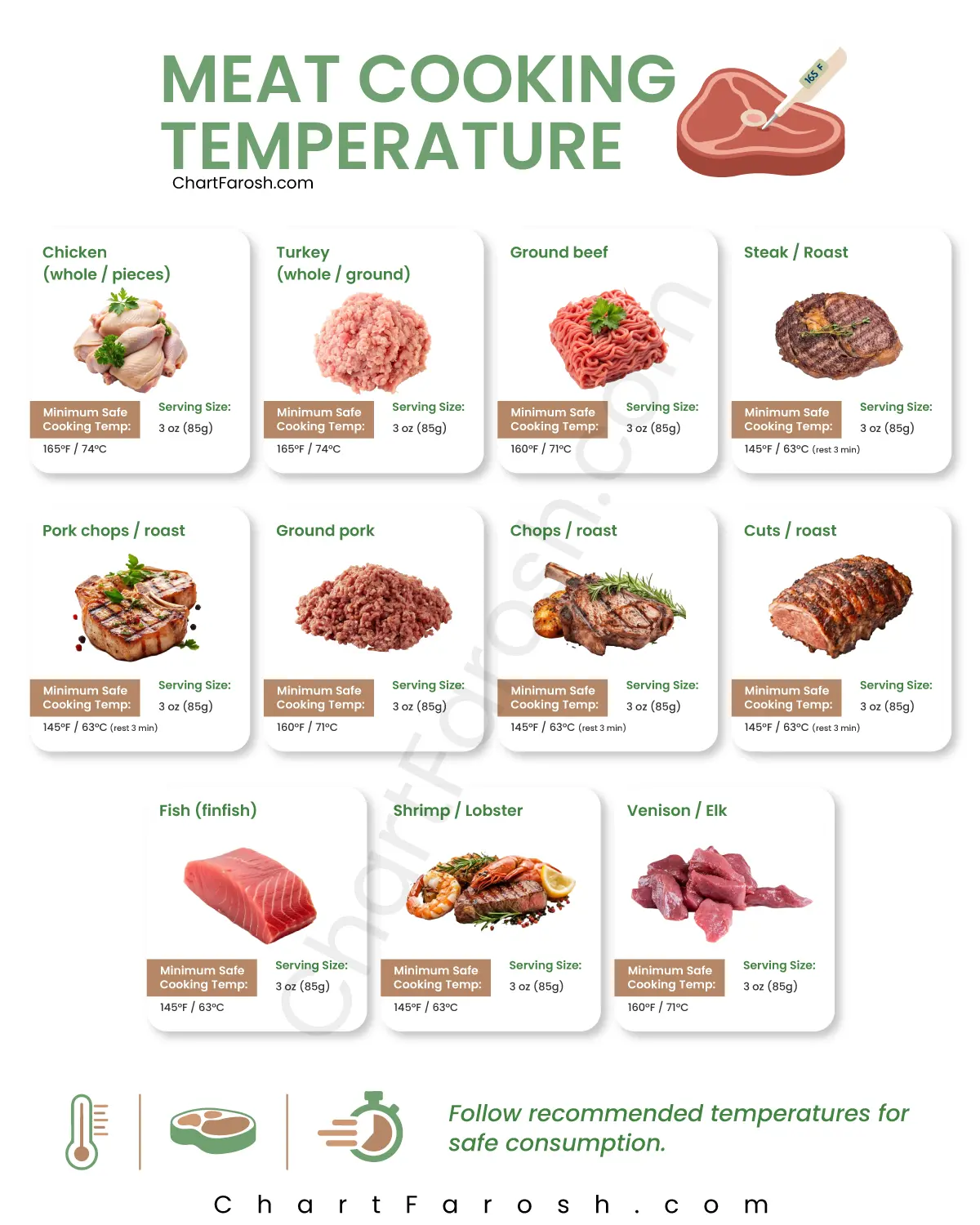
Table of Contents
Meat Cooking Temperature Chart
A Meat Cooking Temperature Chart gives you a quick reference for knowing when meat is safe to eat and when it’s cooked the way you actually want it.
Different meats require different internal temperatures to kill harmful bacteria, and those temperatures don’t always line up with how “done” the meat looks on the outside.
Relying on time alone isn’t enough. Thickness, cooking method, and starting temperature all affect how meat cooks.
That’s why internal temperature is the most reliable indicator of doneness and safety.
| Meat Type | Cut / Food | Serving Size | Minimum Safe Cooking Temp |
| Poultry | Chicken (whole / pieces) | 3 oz (85g) | 165°F / 74°C |
| Poultry | Turkey (whole / ground) | 3 oz (85g) | 165°F / 74°C |
| Beef | Ground beef | 3 oz (85g) | 160°F / 71°C |
| Beef | Steak / Roast | 3 oz (85g) | 145°F / 63°C (rest 3 min) |
| Pork | Pork chops / roast | 3 oz (85g) | 145°F / 63°C (rest 3 min) |
| Pork | Ground pork | 3 oz (85g) | 160°F / 71°C |
| Lamb | Chops / roast | 3 oz (85g) | 145°F / 63°C (rest 3 min) |
| Veal | Cuts / roast | 3 oz (85g) | 145°F / 63°C (rest 3 min) |
| Seafood | Fish (finfish) | 3 oz (85g) | 145°F / 63°C |
| Seafood | Shrimp / Lobster | 3 oz (85g) | 145°F / 63°C |
| Game Meat | Venison / Elk | 3 oz (85g) | 160°F / 71°C |
Safe Internal Temperatures for Meat
Food safety isn’t about being overly cautious, it’s about understanding what actually matters.
Harmful bacteria like Salmonella and E. coli are killed at specific temperatures, which is why internal temperature is so important.
Safe internal temperatures ensure meat is cooked thoroughly enough to be eaten without increasing the risk of foodborne illness.
| Meat Type | Minimum Safe Temp (°F) | Notes |
| Chicken (all parts) | 165°F | No rest time needed |
| Turkey | 165°F | Applies to whole and ground |
| Beef (whole cuts) | 145°F | Rest time required |
| Pork | 145°F | Applies to chops and roasts |
| Ground meats | 160°F | Includes beef, pork, lamb |
| Fish | 145°F | Flesh should be opaque |
These temperatures are about safety first, doneness preferences come second.
Meat Doneness Temperature Chart
Doneness is where personal preference comes in. Two people can cook the same steak safely and still want very different results.
Doneness temperatures apply mostly to whole cuts of red meat, where internal texture and juiciness matter.
| Doneness Level | Internal Temp (°F) | Description |
| Rare | 125°F | Cool red center |
| Medium-Rare | 135°F | Warm red center |
| Medium | 145°F | Pink center |
| Medium-Well | 150°F | Slight pink |
| Well Done | 160°F+ | Fully cooked |
Remember, meat continues cooking while it rests, so pulling it slightly early matters.
Why Meat Cooking Temperatures Matter
Cooking meat to the correct temperature isn’t just about taste, it’s about safety, texture, and consistency.
Undercooked meat can carry bacteria that cause serious illness, while overcooked meat loses moisture and becomes tough.
Temperature removes the guesswork. Color can change before meat is safe, and juices can run clear even when internal temps are too low.
Using temperature as your guide ensures you’re not relying on unreliable signs.
Once you get comfortable checking internal temps, cooking becomes more predictable. You stop worrying and start enjoying the process.
Poultry Cooking Temperature Guide
Poultry is one of the most important meats to cook correctly. Unlike whole cuts of beef, poultry must be cooked thoroughly every time. There’s no rare or medium option here.
All poultry, chicken, turkey, duck, and others, should reach the same minimum internal temperature to be considered safe.
| Poultry Type | Internal Temp (°F) | Notes |
| Chicken breast | 165°F | Thickest part |
| Chicken thigh | 165°F | Juices run clear |
| Turkey (whole) | 165°F | Check multiple spots |
| Duck | 165°F | Applies to all parts |
| Ground poultry | 165°F | No exceptions |
Always measure at the thickest part, avoiding bones.
Beef, Pork, and Lamb Cooking Temps
Red meats are more forgiving than poultry, especially when they’re whole cuts. These meats can be safely eaten at lower temperatures as long as surface bacteria are properly cooked.
That said, ground versions of these meats follow different rules, which we’ll cover next.
| Meat Type | Safe Internal Temp (°F) | Notes |
| Beef steak | 145°F | Rest required |
| Pork chop | 145°F | Slight pink is fine |
| Lamb chops | 145°F | Juicy and tender |
| Beef roast | 145°F | Check center |
| Pork roast | 145°F | Rest before slicing |
Resting time is part of safety, not optional.
Ground Meat vs Whole Cut Temperatures
Ground meat requires higher cooking temperatures than whole cuts because bacteria can be mixed throughout during processing.
With whole cuts, bacteria stay mostly on the surface, which is exposed to high heat. That difference matters.
| Meat Type | Safe Temp (°F) | Reason |
| Ground beef | 160°F | Bacteria mixed in |
| Ground pork | 160°F | Higher risk |
| Ground lamb | 160°F | Same rule |
| Whole steak | 145°F | Surface bacteria only |
| Whole pork chop | 145°F | Rest required |
Fish Meat Cooking Temperature Guide
Fish cooks quickly and can go from perfect to overdone in minutes. Internal temperature still matters, even though texture is often used as a guide.
Fish is considered done when it reaches the proper temperature and flakes easily with a fork.
| Fish Type | Internal Temp (°F) | Notes |
| Salmon | 145°F | Opaque and flaky |
| Cod | 145°F | Firm texture |
| Tuna | 145°F | Can be cooked less if desired |
| Shrimp | 145°F | Pink and opaque |
| Shellfish | 145°F | Firm flesh |
Overcooking fish dries it out fast, so watch closely.
Meat Rest Time Explained
Resting meat isn’t just a chef trick, it’s part of proper cooking. When meat rests, juices redistribute and internal temperature stabilizes.
For certain meats, resting is also part of food safety guidelines. Skipping rest time can lead to drier meat and inaccurate temperature readings.
| Meat Type | Rest Time | Why It Matters |
| Beef steak | 3 minutes | Finishes cooking |
| Pork chops | 3 minutes | Juice retention |
| Lamb | 3 minutes | Texture improves |
| Large roasts | 10–15 minutes | Even cooking |
| Poultry | Optional | Safety temp already met |
Common Meat Cooking Mistakes
One of the biggest mistakes people make is trusting appearance instead of temperature. Meat can brown before it’s safe, especially on high heat.
Another common issue is not accounting for carryover cooking, which leads to overdone results.
Using an inaccurate or poorly placed thermometer is another problem. Always measure at the thickest part and avoid bones or fat pockets.
Finally, cutting meat too soon releases juices and drops internal temperature. A few minutes of patience goes a long way.
Meat Temperature Safety Summary
If there’s one takeaway, it’s this: temperature matters more than time, color, or instinct. A reliable Meat Cooking Temperature Chart helps you cook safely without sacrificing taste.
Know the safe minimums, understand doneness levels, respect rest time, and treat ground meats differently than whole cuts.
Once you cook this way, it becomes second nature, and your meals improve across the board.
FAQs
Do I really need a meat thermometer?
Yes. It’s the most accurate way to ensure safety and proper doneness.
Can meat still be pink and safe to eat?
Yes, especially whole cuts of beef, pork, and lamb.
Why does ground meat need higher temperatures?
Because bacteria can be mixed throughout during processing.
Should I rest all meats after cooking?
Resting improves quality and is required for some meats.
Is fish safe at lower temperatures?
Fish should reach 145°F to be considered safe.